When we talk about “dog grooming,” what comes to mind? For most, it’s a whole system of care: professional haircuts, baths, nail trims, and maybe even diet planning. And while those trips to the groomer for some professional pampering are wonderful, the true foundation of a healthy coat is built right at home. That brings us to the core of this guide: how to choose the right dog grooming brush for your dog.
But first, let’s ask a more fundamental question: why do we really brush our dogs? Is it just to get a shinier coat? To reduce the tumbleweeds of fur rolling through our living rooms? To keep allergies at bay? Of course, a softer, tangle-free coat and a cleaner house are fantastic bonuses. Those are all valid benefits, but it’s that shared sense of peace and belonging that truly matters.
From my experience, the most precious reward of brushing is the profound connection it builds. It’s in the quiet moment when my dog leans in, anticipating the gentle strokes as a form of affection. It’s the warmth I feel as we share this calm ritual. Afterward, as I clean the brush and put it away, my dog settles peacefully into his bed. In that small routine, we have reinforced a sense of order, rhythm, and deep familiarity within our home.
So, with that in mind, after confirming your dog’s coat type, let’s explore the different types of dog grooming brush and walk through the process of brushing your dog, step by step.
Brush Types 101: Matching to Coat
Brushing is about three things: detangling knots, removing loose fur, and smoothing the coat to a healthy shine. These are the exact jobs that different dog grooming tools are designed to do. Walking into a pet store can feel overwhelming, so let’s simplify what you really need.
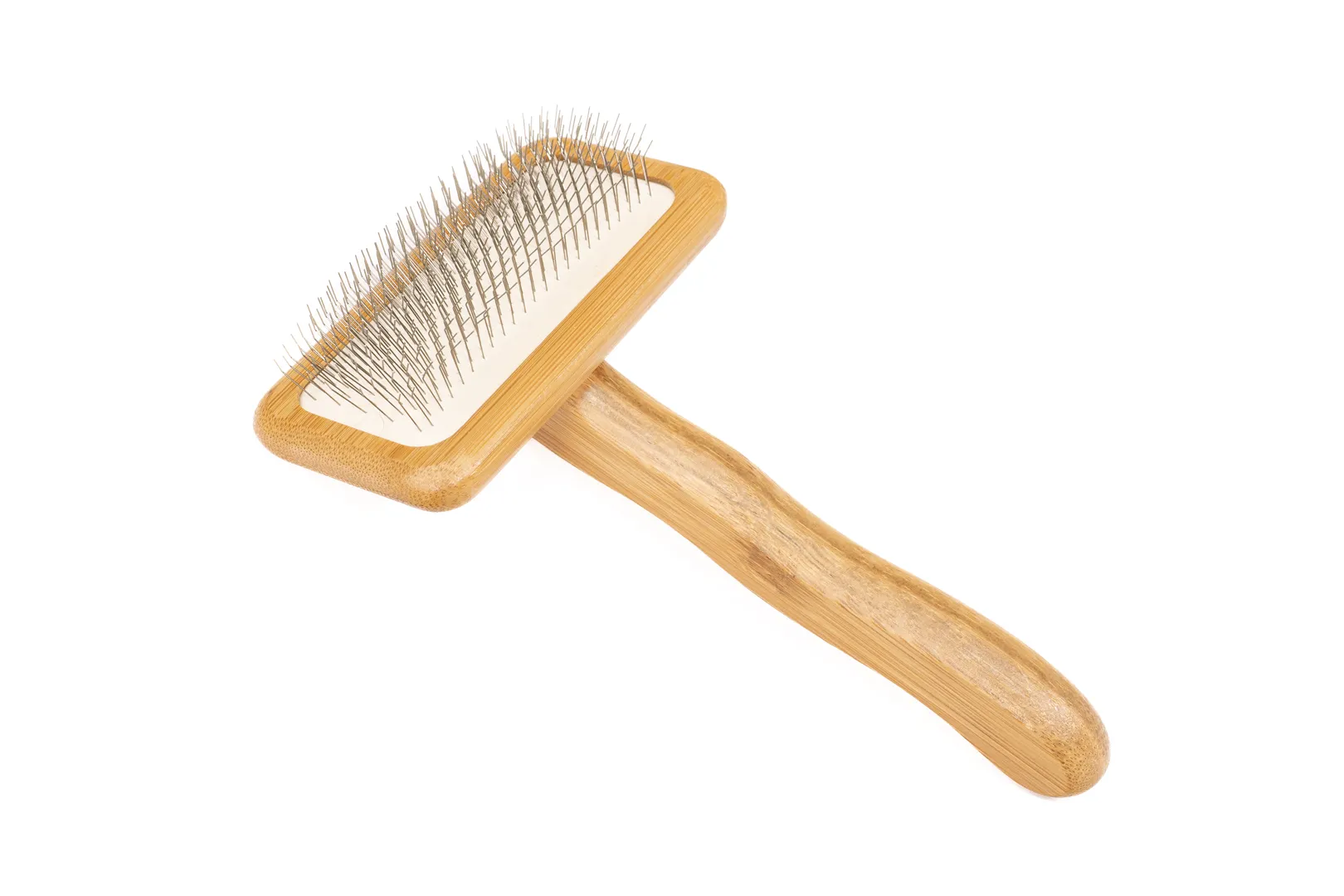
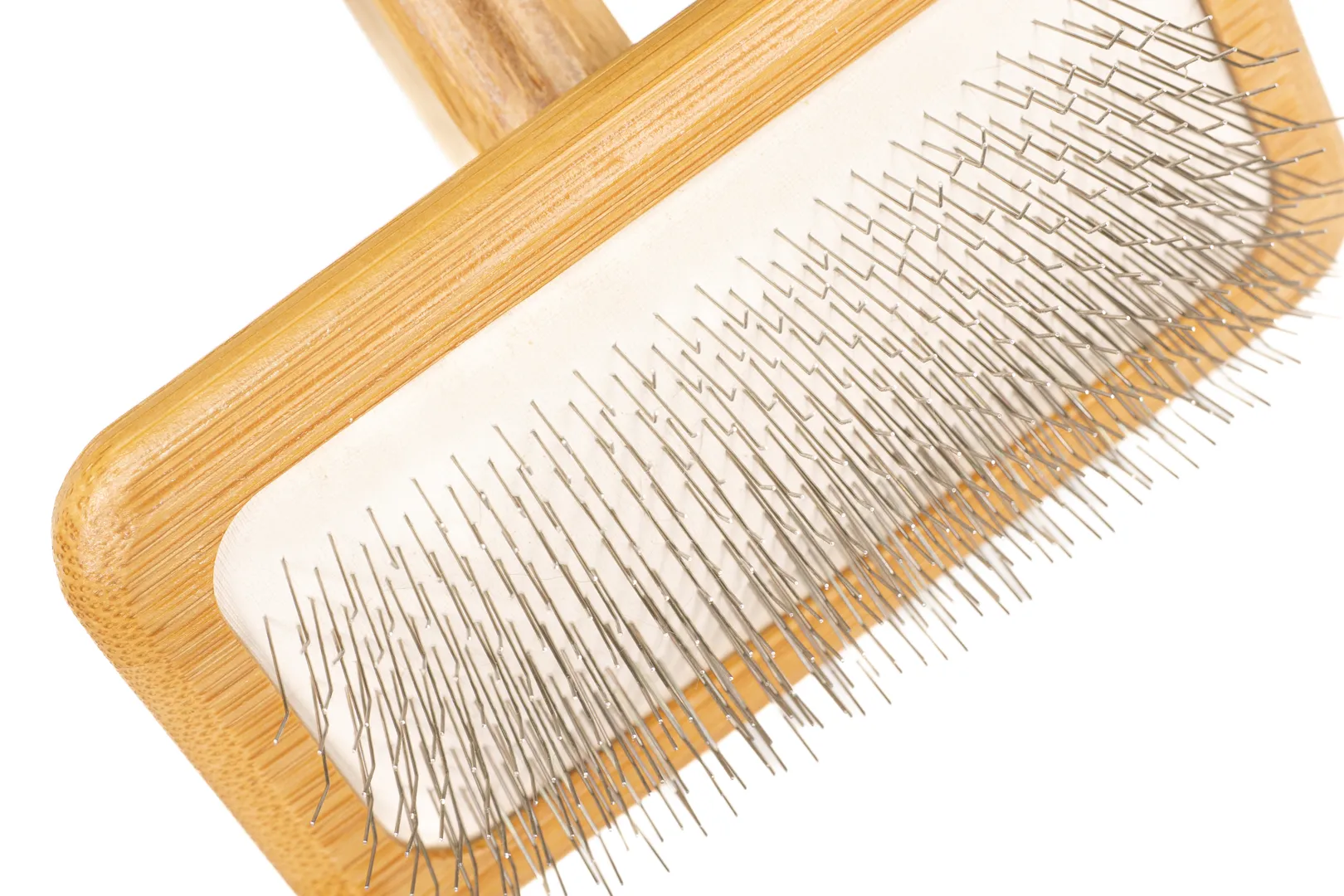
The Slicker Brush
This is your go-to tool for tackling mats and tangles, especially in medium-to-long coats. Its head is packed with bent wire pins that get deep into the fur to remove loose undercoat and break up knots. It’s also the secret to creating that fluffy, voluminous look on curly coats like Poodles & Doodles.
Best For: Medium-to-long-haired dogs, curly-coated breeds (like Poodles & Doodles), and dogs with thick double coats (like Golden Retrievers).
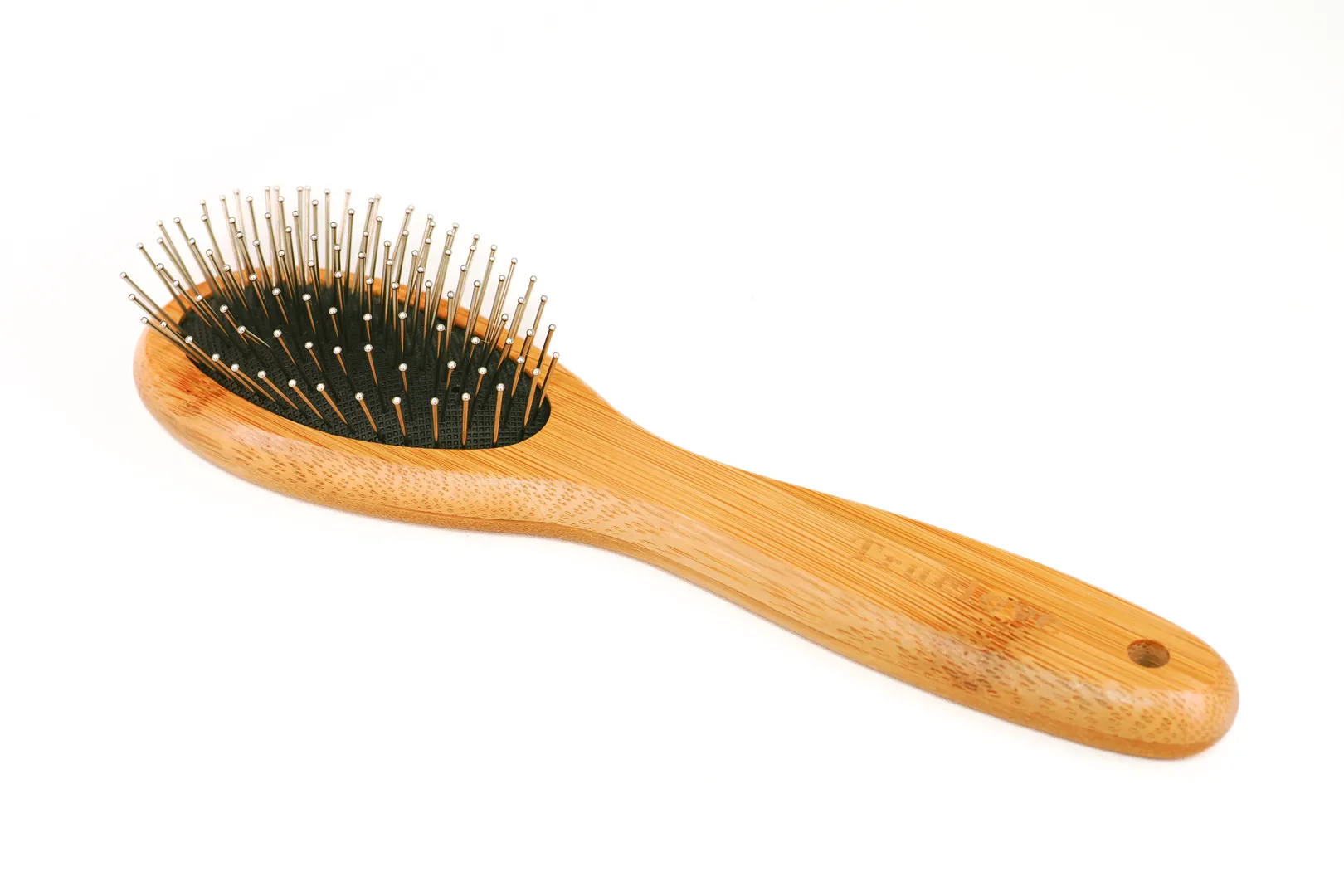
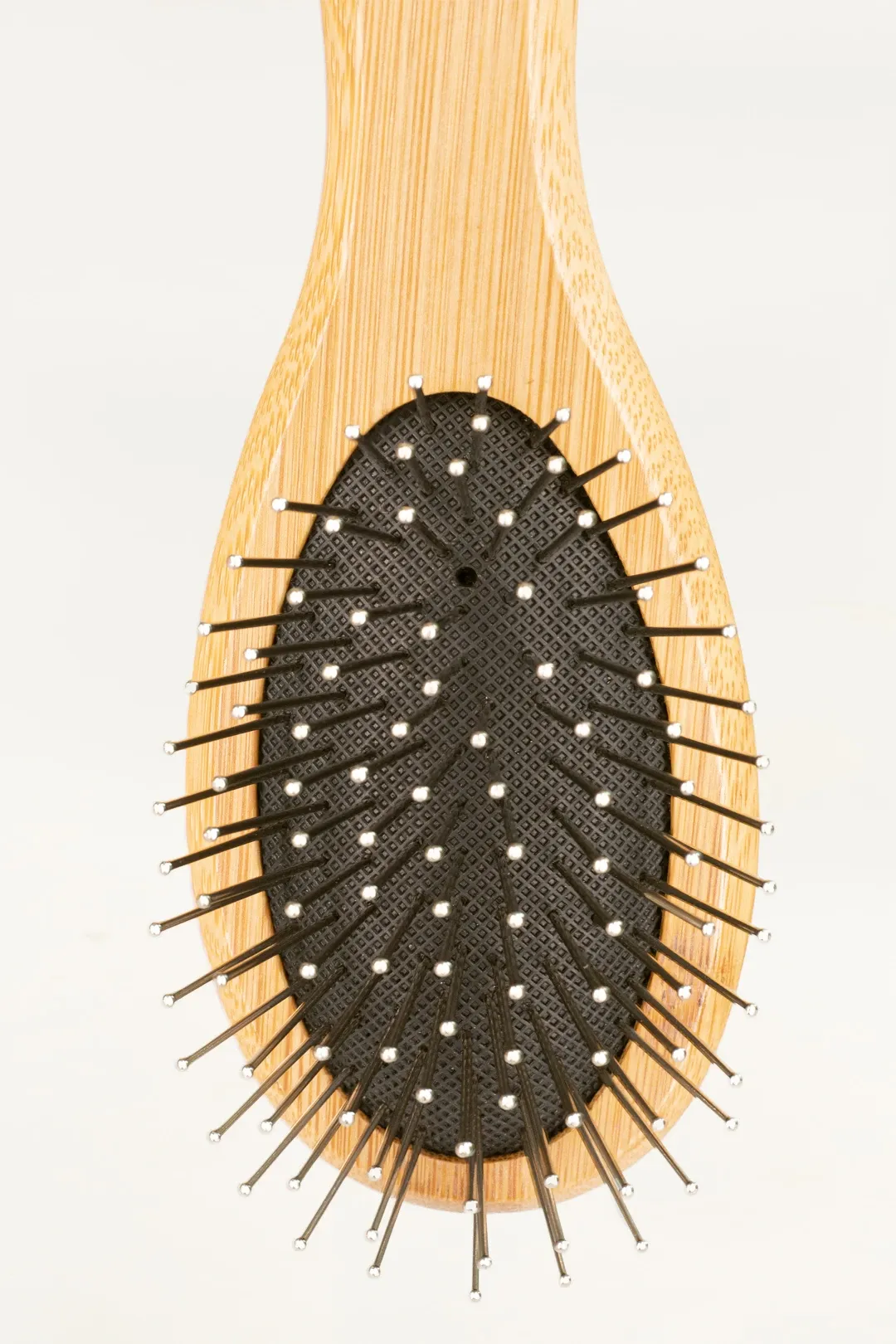
The Pin Brush
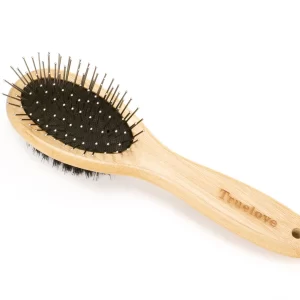
Looking a lot like a human hairbrush, this tool has flexible metal pins, often capped with little balls for comfort. It’s not a heavy-duty detangler. Instead, it glides through the coat to handle light, everyday tangles, remove surface debris, and distribute the skin’s natural oils for a healthy shine.
Best For: Dogs with medium-to-long, silky coats (like Setters or Yorkies). It’s also the perfect introductory brush for puppies to get them accustomed to the grooming routine.
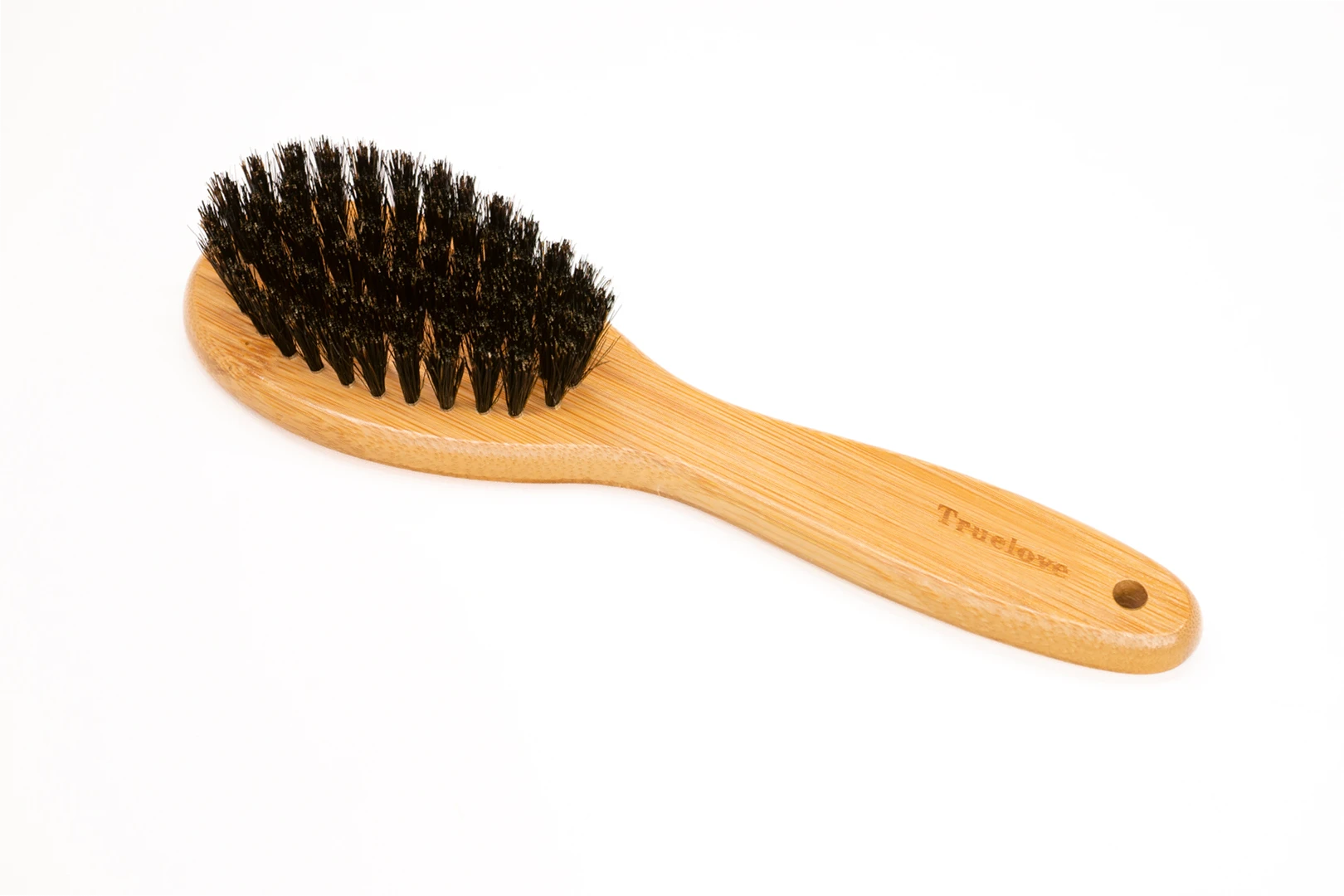
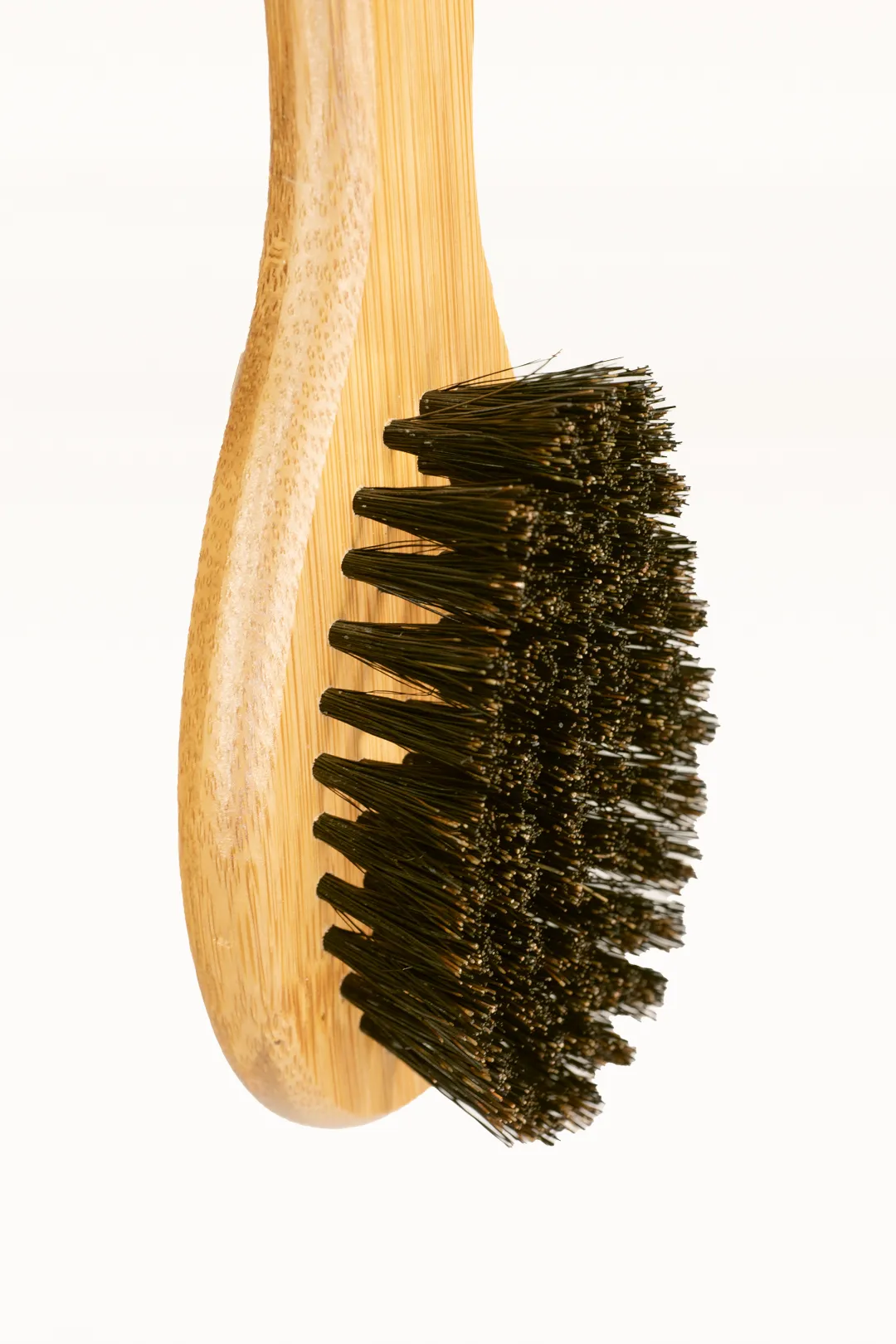
The Bristle Brush
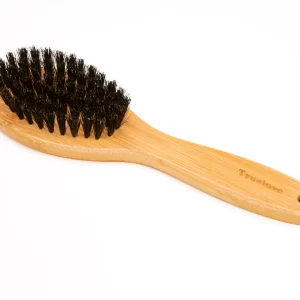
Think of this short coat dog brush as a polishing tool, not a detangler. Its soft, dense bristles are designed to sweep away dander and fine dust from the topcoat. More importantly, it helps distribute natural oils from the skin to the ends of the hair, resulting in a glossy, high-shine finish.
Best For: Short, smooth-coated breeds (like Boxers, Greyhounds, and Pit Bulls). It can also be used as a final finishing step on wiry or long-coated dogs to add luster.
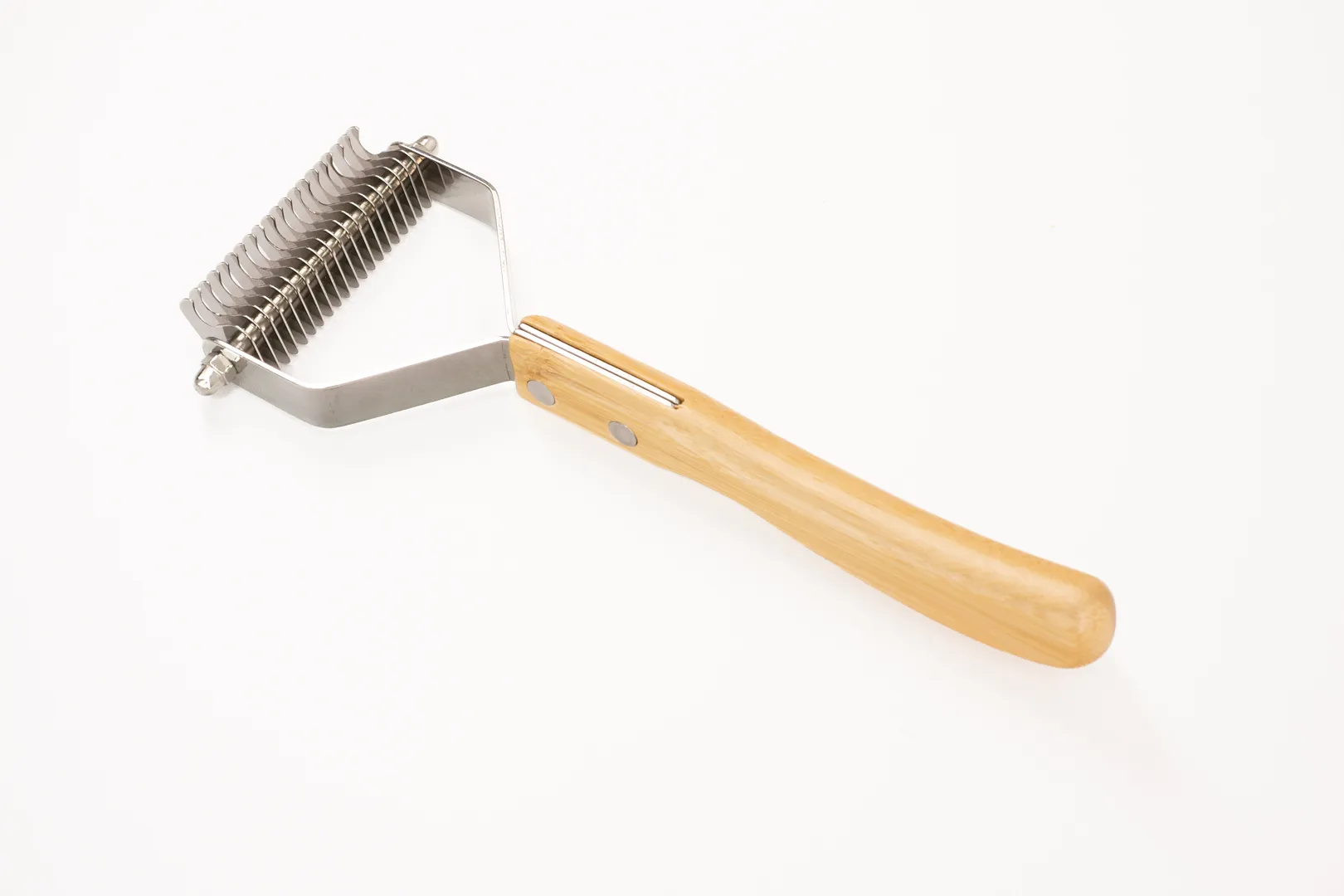
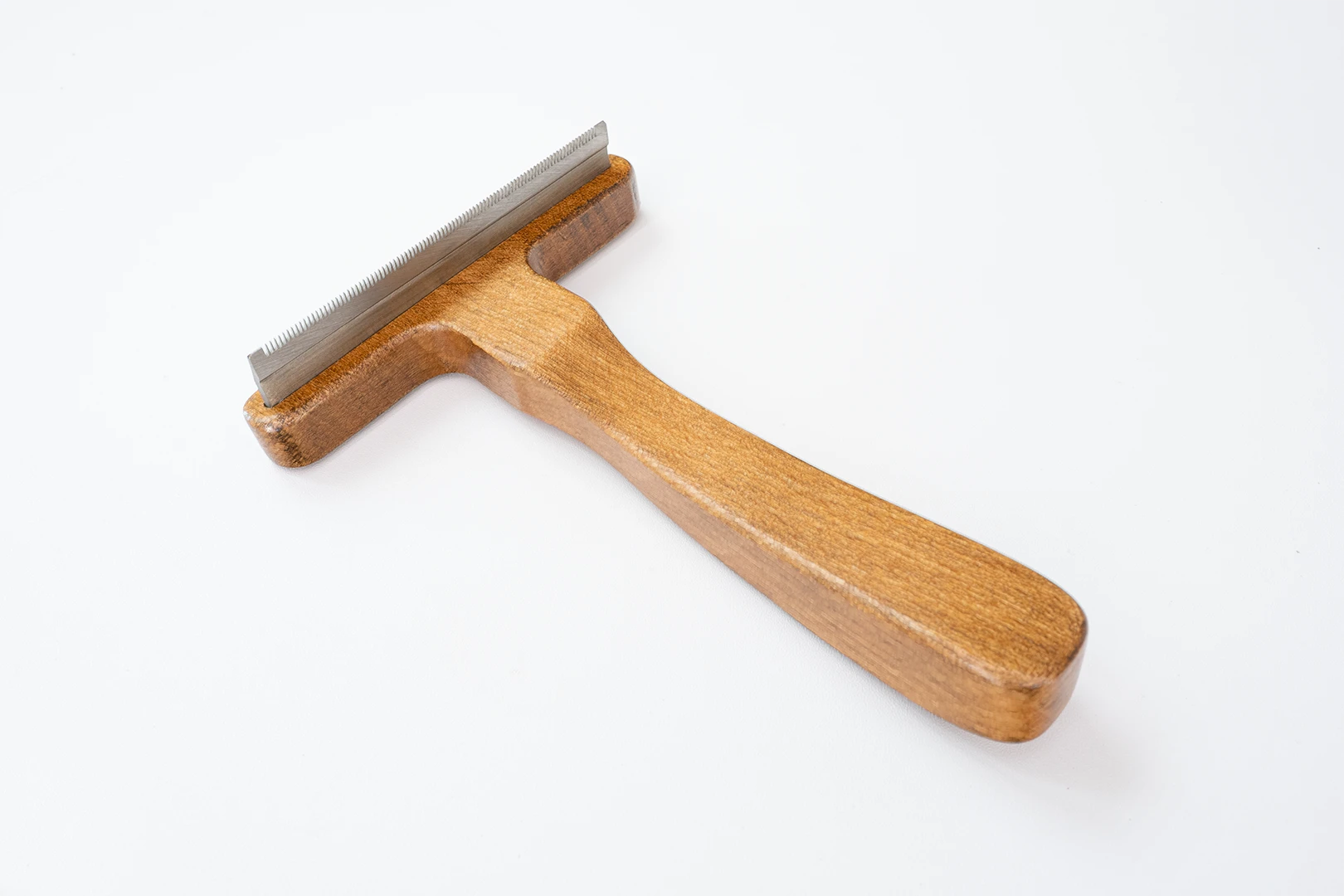
The Dematting Rake & Deshedding Brush
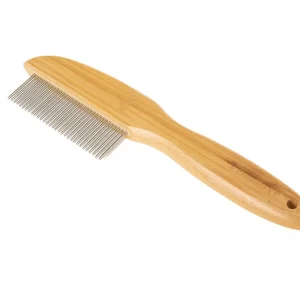
These are problem-solvers. The Dematting Rake has sharp, serrated blades for carefully cutting through severe mats that cannot be brushed out. The Deshedding Brush reaches through the topcoat to remove loose undercoat hair. The Deshedding Brush is the best tool for double coated dog during seasonal shedding. The dematting rake is an emergency-use item for tackling stubborn, felt-like mats. Be sure to use it sparingly, as this dog grooming brush can also trim away healthy hair!
Best For: The brush is a must-have for any double-coated breed (like Huskies, German Shepherds, and Bernese Mountain Dogs). The dematting rake can be used on any long-haired dog, but requires extreme care.
Bamboo Dematting Rake
Deshedding Brush
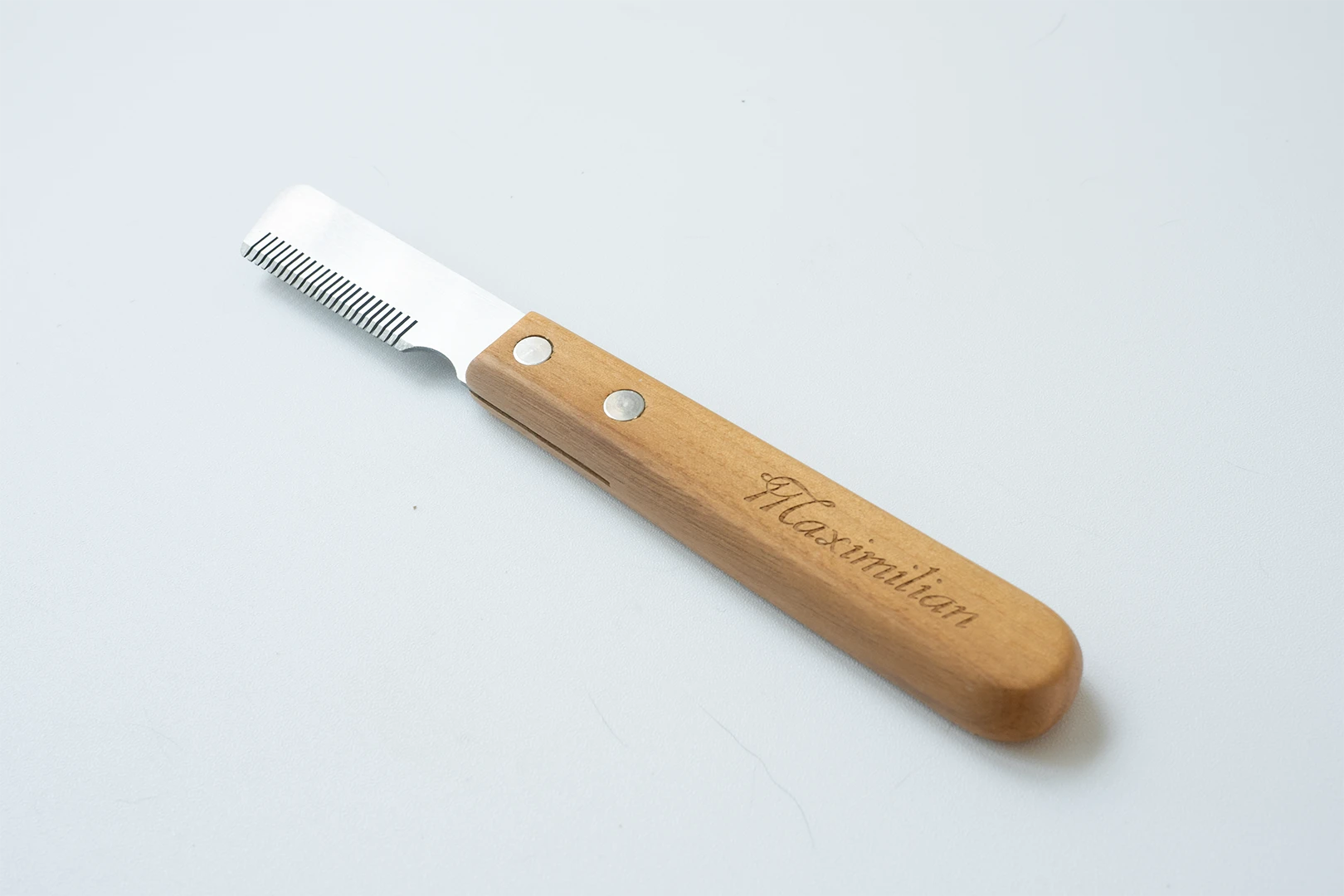
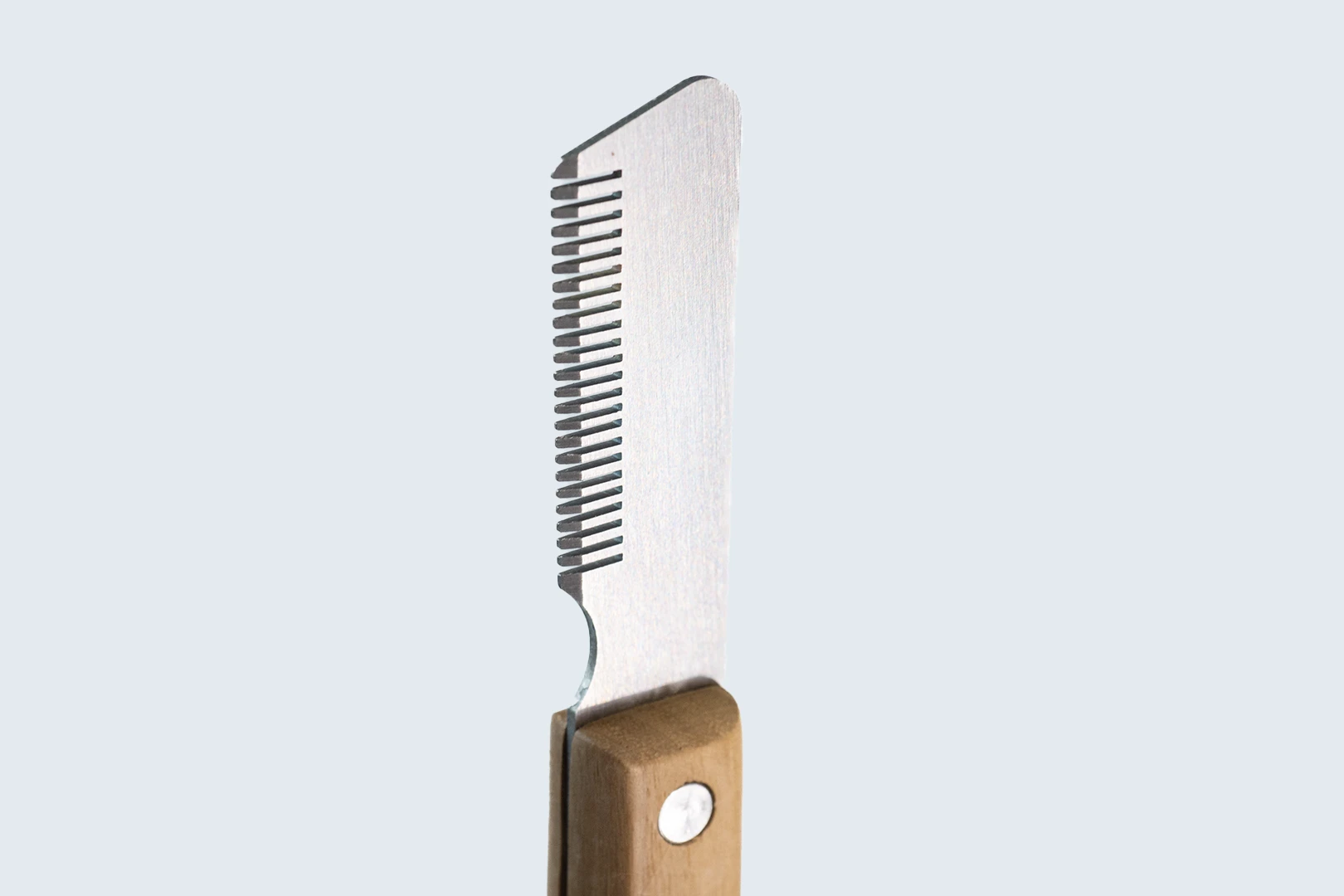
The Stripping Knife
Stripping Knife is a niche tool for a very specific job. Despite the name, it’s not for cutting; its dull, serrated edge is designed to grip and help you pull out the dead outer layer of hair from the root on wiry-coated breeds. This process, called “hand-stripping,” is what maintains the coat’s proper coarse texture and vibrant color.
Best For: Most Terrier breeds, Schnauzers, Irish Wolfhounds, and any other breed with a “hard” coat that is traditionally hand-stripped instead of clipped.
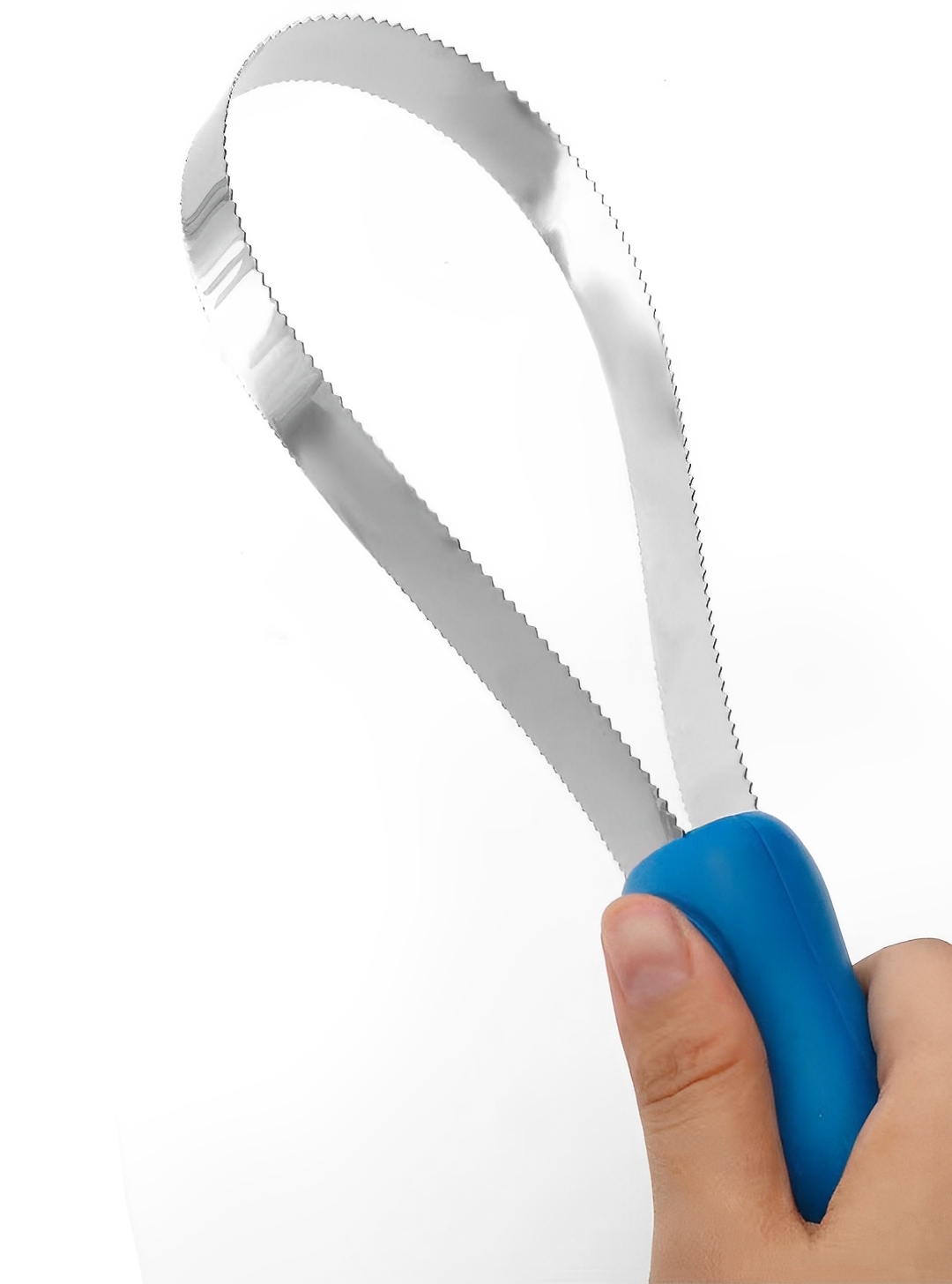
The Shedding Blade
Shedding blade, often a looped or straight piece of metal with fine teeth, is designed for one thing: removing a massive amount of loose fur, fast. It works by grabbing and pulling out dead hair from the topcoat during a heavy shed.
Best For: Short-to-medium coated dogs that shed heavily, like Labradors, Beagles, and Boxers.
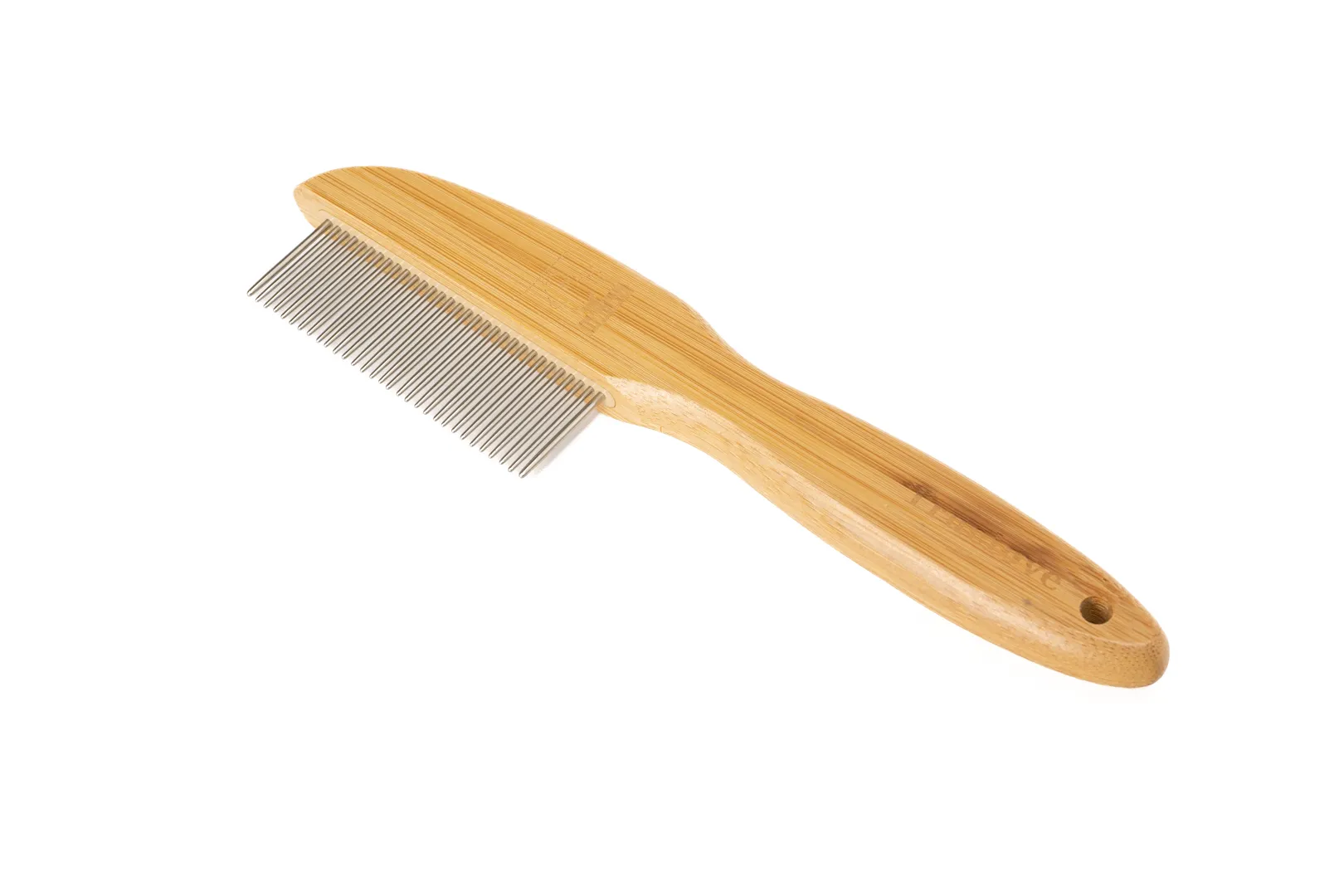
The Grooming Comb
This is one of the most crucial tools in your kit. After you’ve brushed an area with a slicker or pin brush, you run this comb through the coat. It’s also perfect for delicate areas like the face and paws.
Best For: Any dog with hair long enough to tangle, especially long, curly, or double-coated breeds.
Examples of Grooming for Different Dogs
As the seasons change, you might notice more of your dog’s fur sticking to your clothes and furniture. It is called Shedding Cycles. Now that you know your tools, let’s put them to work. The right routine depends entirely on your dog’s coat type. Here’s how to build a practical grooming plan.
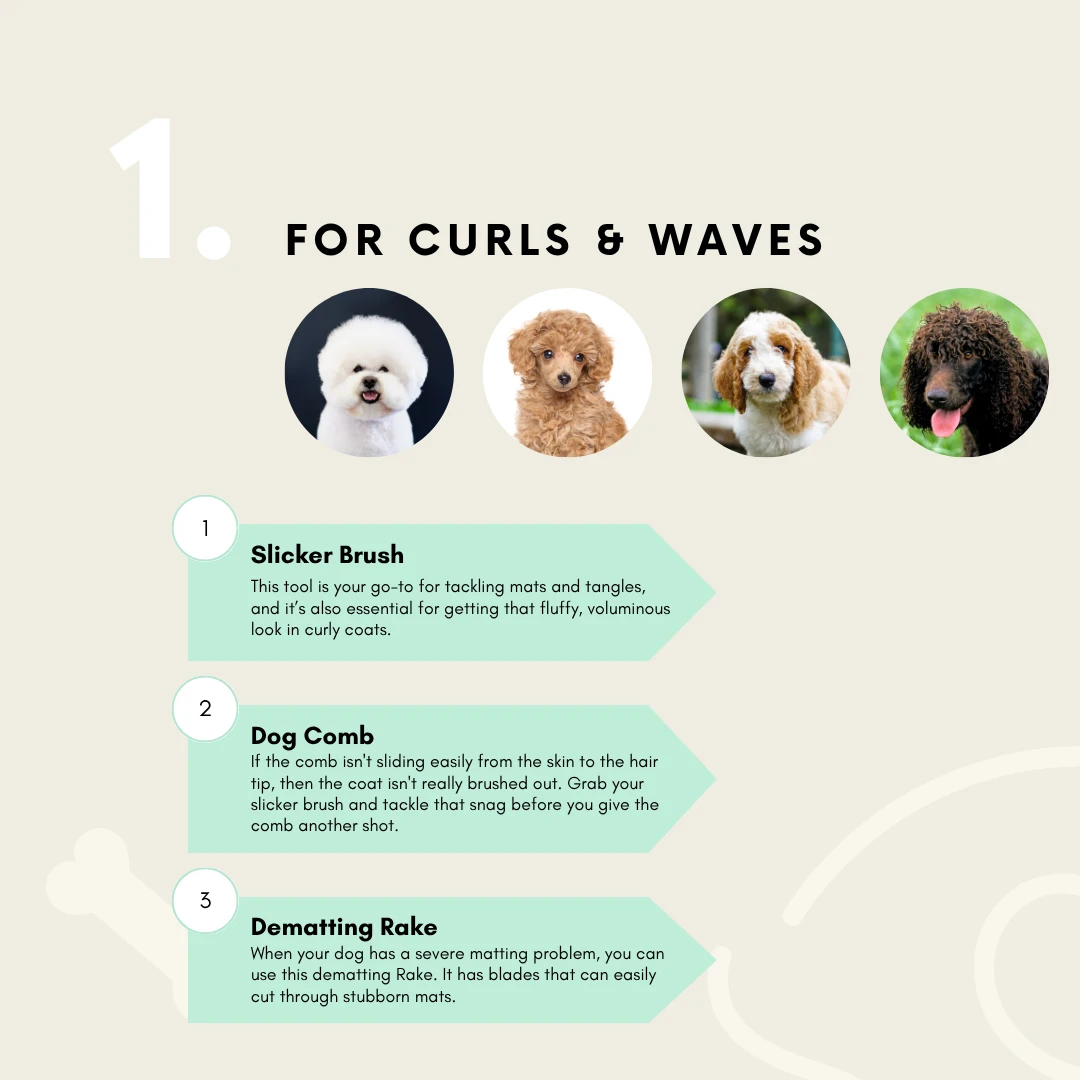
For Curls & Waves
- The Challenge: These coats are notorious for matting from the skin out, even when the surface looks fine.
- The Routine: Daily brushing is non-negotiable. Use the Slicker Brush to work through the coat in small sections, making sure you get all the way to the skin. After brushing a section, run the Steel Comb through the same spot. If it glides through easily from root to tip, you’re golden. If it snags, go back to the slicker. When your dog has a severe matting problem, you can use a Dematting Rake to cut the mat.
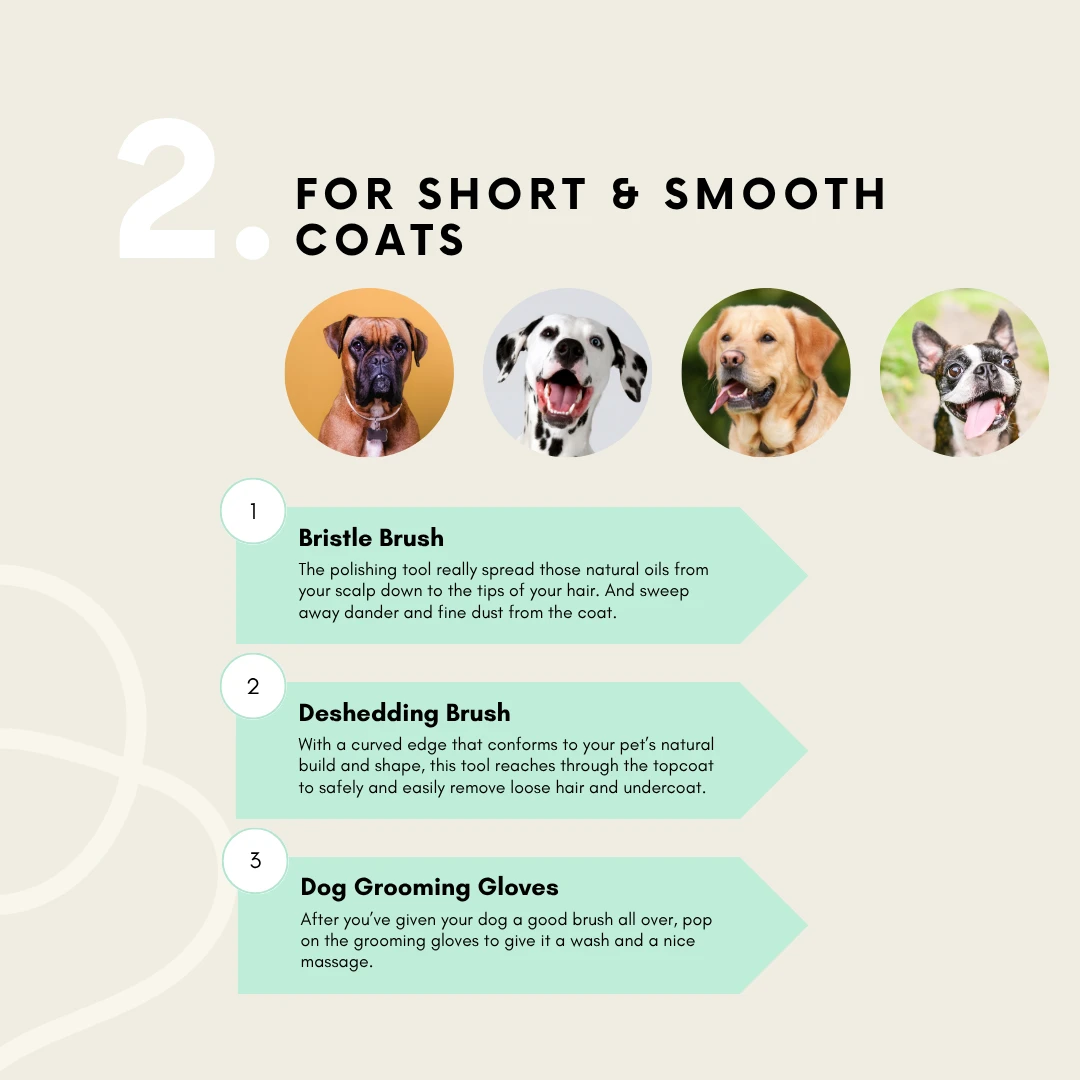
For Short & Smooth Coats
- The challenge: While they don’t tangle, these dogs can be major shedders and accumulate dander.
- The Routine: Once a week, use a Deshedding Brush in circular motions to loosen dead hair and massage the skin. Follow up with the Bristle Brush to sweep everything away and boost that natural shine. It’s a simple but effective one-two punch.
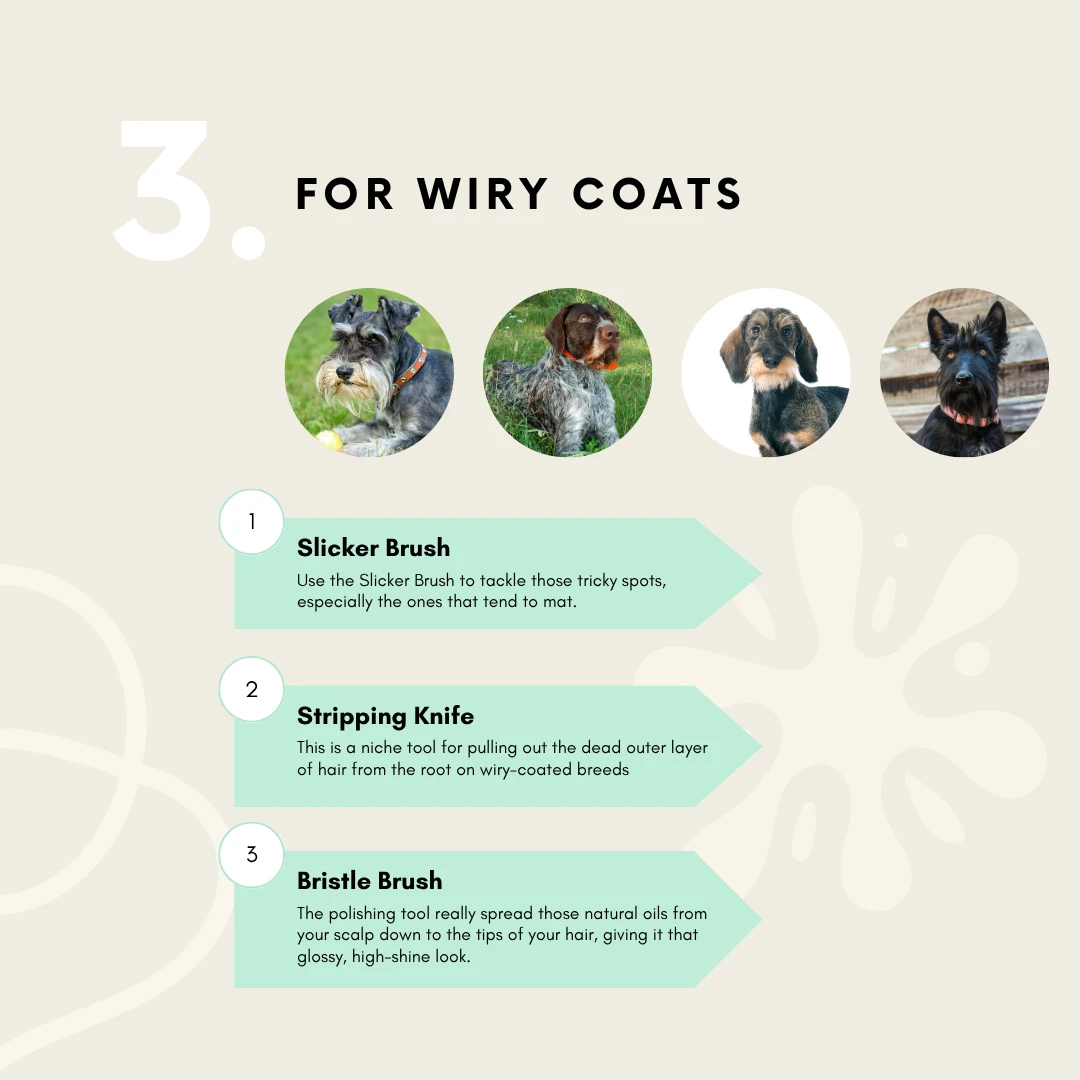
For Wiry Coats
- The Challenge: Maintaining the coarse, weather-resistant texture of the topcoat while managing the softer undercoat, which can get tangled.
- The Routine: Start with a Pin Brush for an all-over pass. If the undercoat is thick, use an Undercoat Rake with short, gentle strokes to clear it out. Finish with a Slicker Brush or Steel Comb, brushing with the grain of the hair to create a neat, tidy appearance.
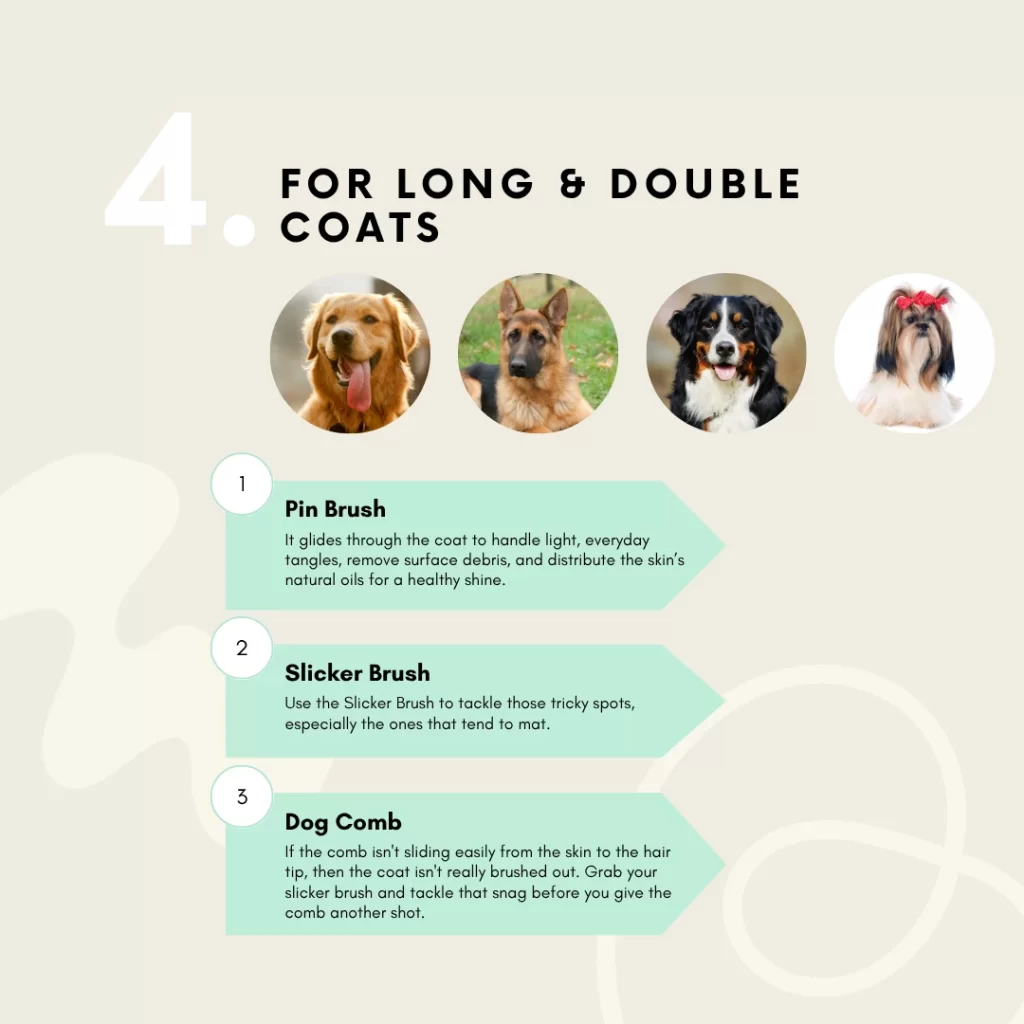
For Long & Double Coats
- The Challenge: You’re dealing with a double-whammy: a high risk of matting in friction spots (like behind the ears and under the legs) and massive seasonal sheds. These Kinds of dogs need the most complex dog grooming brush.
- The Routine:
- Attack the Shed: During shedding season, start with the Pin Brush for an overall pass to detangle the longer topcoat to remove the bulk of the dead, fluffy undercoat, and an overall pass to detangle the longer topcoat.
- Target Problem Areas: Switch to the Slicker Brush for the areas prone to matting. Be thorough but gentle.
- Final Check: Do a final pass with the Steel Comb. This is your quality control—it will catch any tiny knots you might have missed.
Conclusion
Unquestionably, while some professional pampering is excellent, the foundation of a healthy coat and a strong human-animal bond is built through consistent care at home. The success of this routine hinges on one core principle: selecting the right tools for your dog’s specific coat and applying the correct techniques.
Here are the key takeaways to remember:
Match the Tool to the Coat Type: The most important lesson is that different coats require different brushes. A Slicker Brush is essential for detangling the dense fur of curly-coated breeds, while a gentle Bristle Brush is perfect for adding shine to short, smooth coats. For heavy shedders, an Dematting Rake is a non-negotiable tool for managing the dense underlayer.
Tailor the Brushing Routine: Both technique and tools are important. Dogs with long or double coats require a multi-step process, often starting with a rake to remove bulk shed, followed by a pin or slicker brush to detangle. In contrast, curly-coated dogs need daily attention with a slicker and comb, ensuring you brush all the way to the skin to prevent hidden mats.
Focus on Prevention and Maintenance: The goal of a home grooming routine is proactive care. Regular brushing with the correct dog grooming brush prevents severe mats, and reduces shedding around the house. This consistent effort is far more effective than trying to fix problems after they’ve become severe.
The products mentioned above:
-
2-in-1 Double Sided Dog Brush for Shedding & Shine
$14.09 – $14.99Price range: $14.09 through $14.99 This product has multiple variants. The options may be chosen on the product page -
Eco-Friendly Bamboo Soft Bristle Dog Brush | LudiPets
$9.89 – $10.79Price range: $9.89 through $10.79 This product has multiple variants. The options may be chosen on the product page -
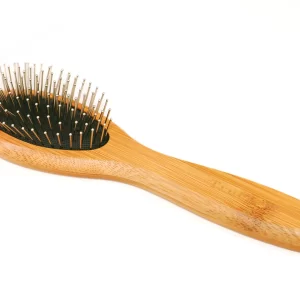
Bamboo Pin Brush for Dogs | LudiPets
$9.89 – $10.89Price range: $9.89 through $10.89 This product has multiple variants. The options may be chosen on the product page -
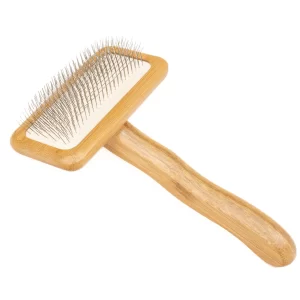
Bamboo Professional Ergonomic Dog Slicker Brush | LudiPets
$13.09 – $13.99Price range: $13.09 through $13.99 This product has multiple variants. The options may be chosen on the product page