Introduction
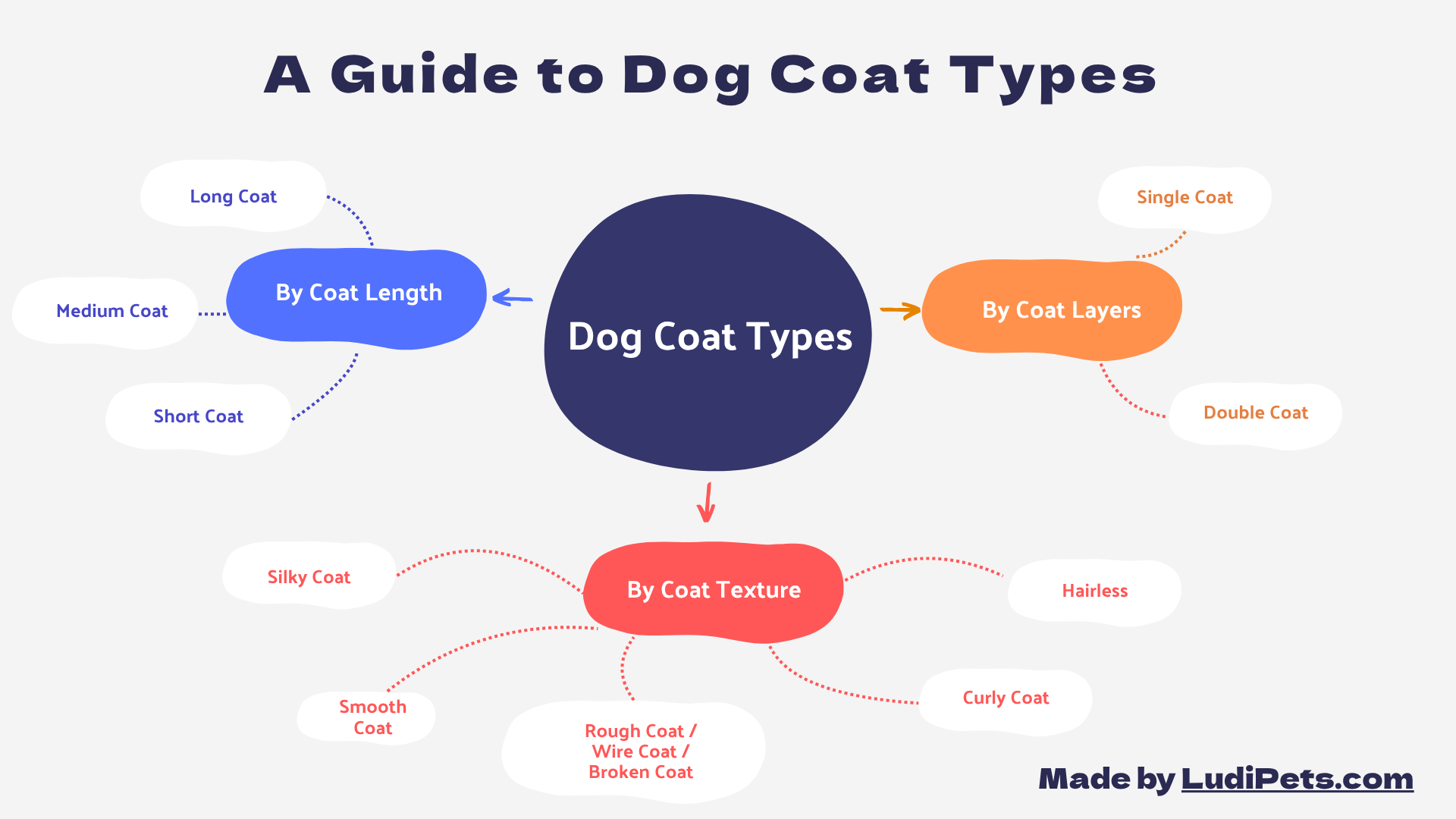
From the golden, sleek long hair of the Golden Retriever to the slightly rough short hair of the French Bulldog, the dog coat type is one of the most distinctive features of our canine companions. A dog’s coat type refers to differences in texture, length, and whether it’s a single or double coat. Different coat types not only require specific grooming methods but also bring various challenges (especially for new owners). There are three independent dimensions to describe a dog’s coat: length, structure (layers), and texture; any dog’s coat can be described using these three dimensions, and the combinations are diverse.
Here is an outline to help you understand what’s coming next:
Let’s delve into the knowledge of lengths, textures, smoothness, and roughness!
Coat Textures
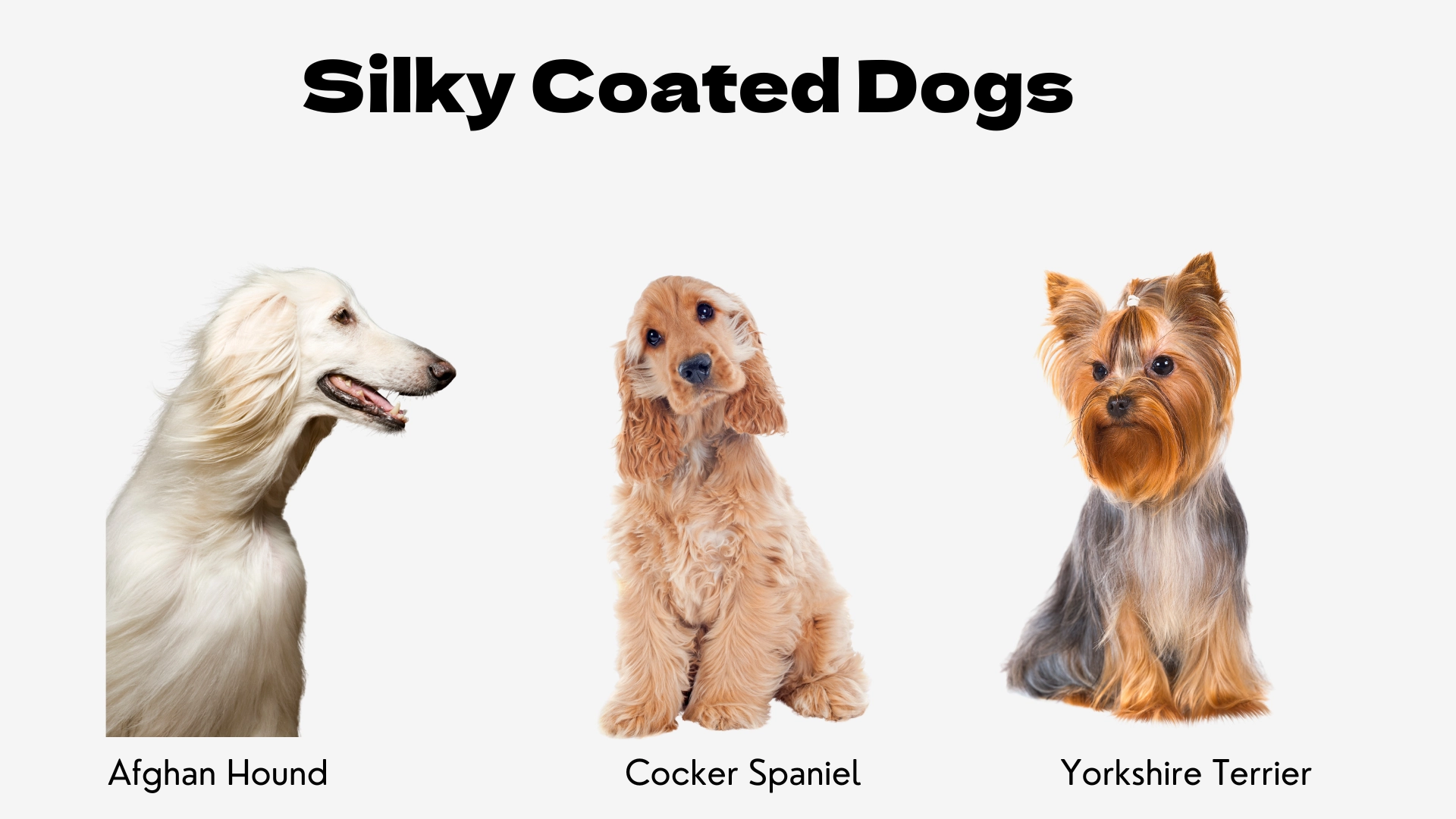
Silky Coated
Silky-coated dogs have a strong natural sheen in their fur, shining and smooth like high-quality silk or a shampoo commercial model, with a fine and soft touch. This type of fur is almost always a single coat. Representative breeds include the Yorkshire Terrier, Afghan Hound, Papillon, and Maltese. The biggest grooming challenge is that the hair is extremely prone to matting, and owners must carefully comb the dog to maintain that charming gloss and smoothness.
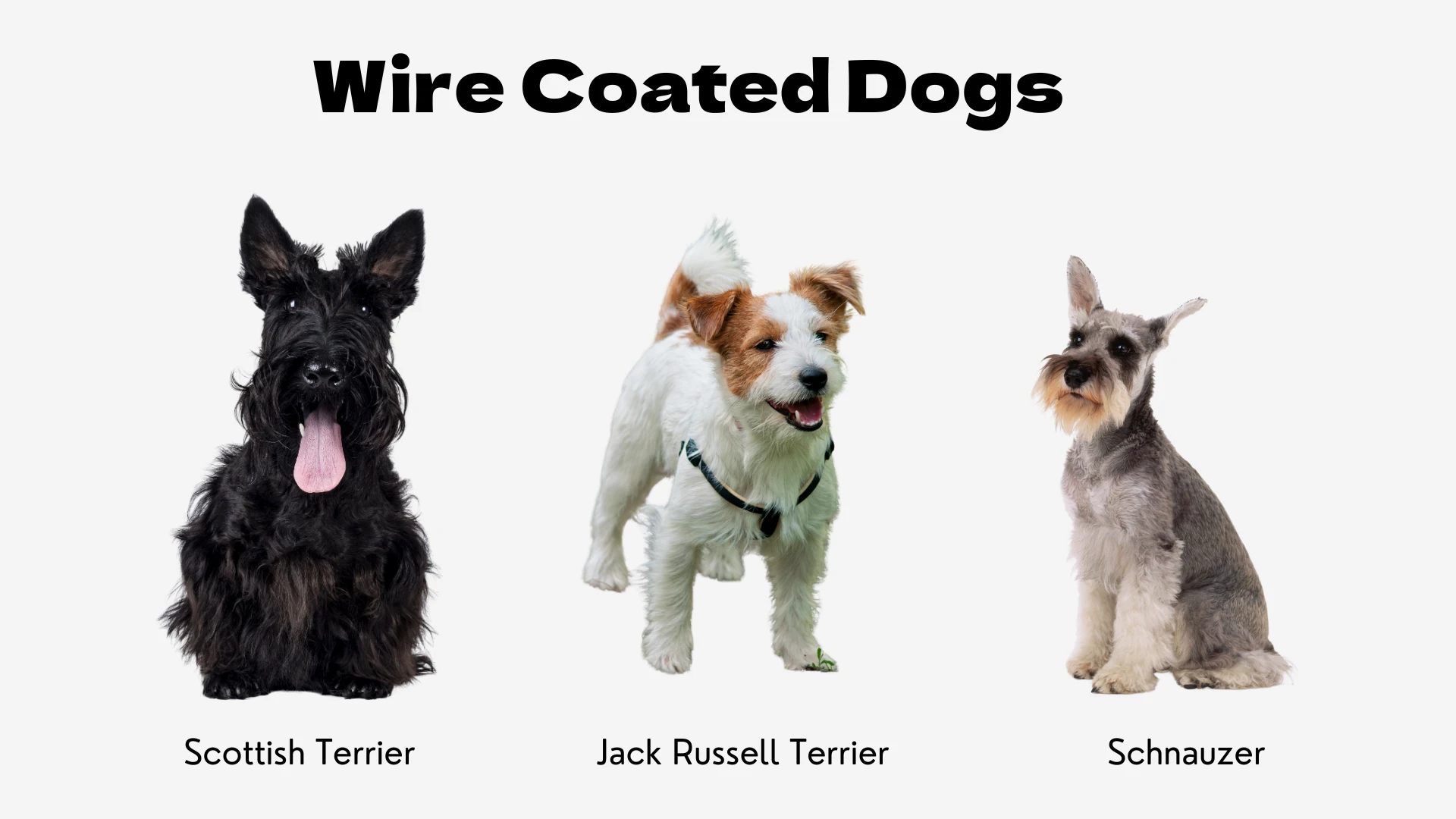
Rough Coated / Wire Coated / Broken Coated
The core characteristics of rough-coated, wire-haired, or broken-coated dogs are similar; these terms are highly interrelated and often used interchangeably. They all refer to that hard, wiry, rough-textured coat. This type of fur feels very coarse, stiff, and prickly, like a wire brush or dry hay—fundamentally different from silky or soft coats. Dogs with these types of fur often have distinctive “beards” and “eyebrows.” Representative breeds include the German Wirehaired Pointer, certain Jack Russell Terriers, and Wire-haired Dachshunds.
The key to maintaining this unique texture lies in professional hand stripping dog grooming; if you use regular scissors to trim, the new hair that grows will gradually become soft, curly, and lose the original wiry characteristics.
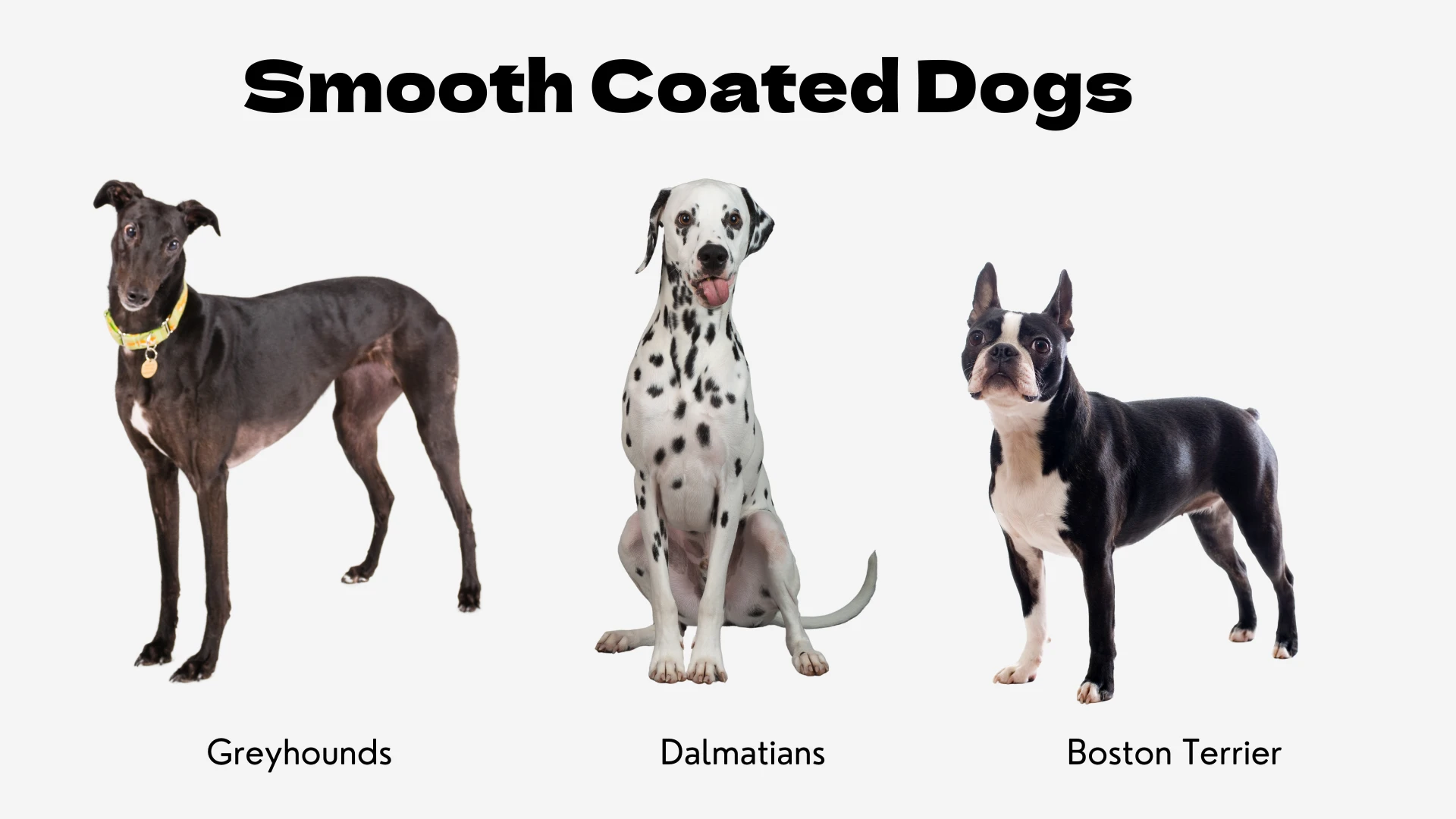
Smooth Coated
Smooth-coated dogs have extremely short fur that lies close to the skin, smoothly covering the body and perfectly outlining the dog’s muscle lines and bone structure, without long furnishings. The overall appearance is simple and clean. This dog coat type structure can be either single or short, smooth double coats. Representative breeds include Greyhounds, Whippets, Doberman Pinschers, Dalmatians, French Bulldogs, English Bulldogs, Pugs, Rottweilers, short-haired Pointers (like the German Shorthaired Pointer), and Labradors.
The shed short hairs of these breeds are like tiny needles, easily embedding into clothes and upholstery fabrics, making them very difficult to clean. Smooth coat dogs may appear low-maintenance, but regular grooming is essential to manage shedding.
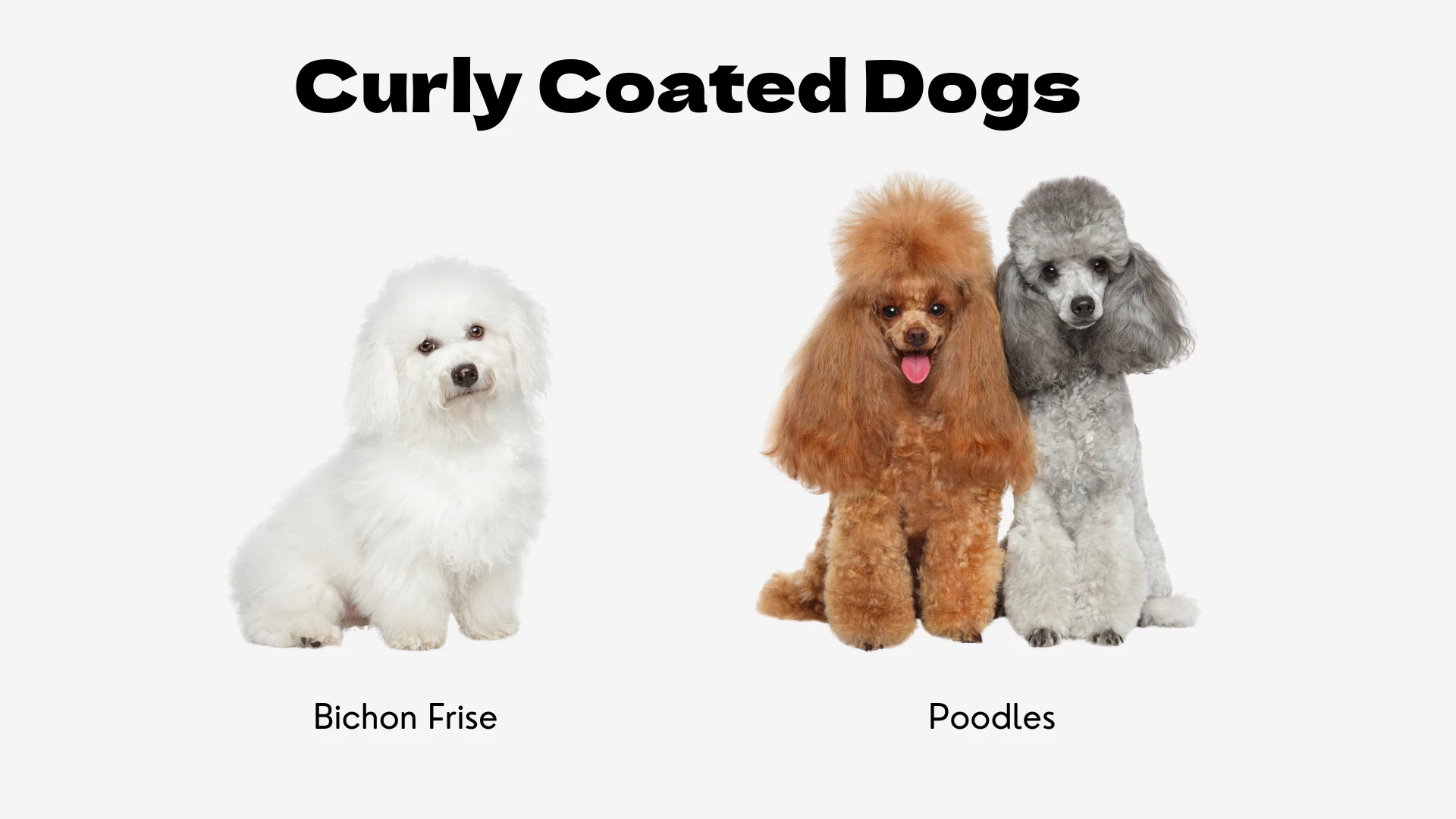
Curly Coated
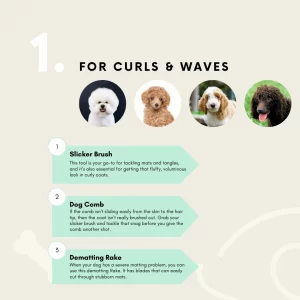
Curly-coated dogs have fur that forms tight, distinct curls, spiral curls, or waves, giving them a full and fluffy appearance. The fur feels soft and elastic. This type of fur mostly consists of a single coat. Representative breeds include Poodles, Bichon Frise, Irish Water Spaniels, and Portuguese Water Dogs.
When it comes to dog grooming Bichon Frise, the core challenge of this dog coat type is that the curly structure makes the fur extremely prone to tangling and matting. This requires high-frequency brushing and regular trimming. Owners must be diligent in combing the dog to maintain their iconic look.
Hairless Dogs
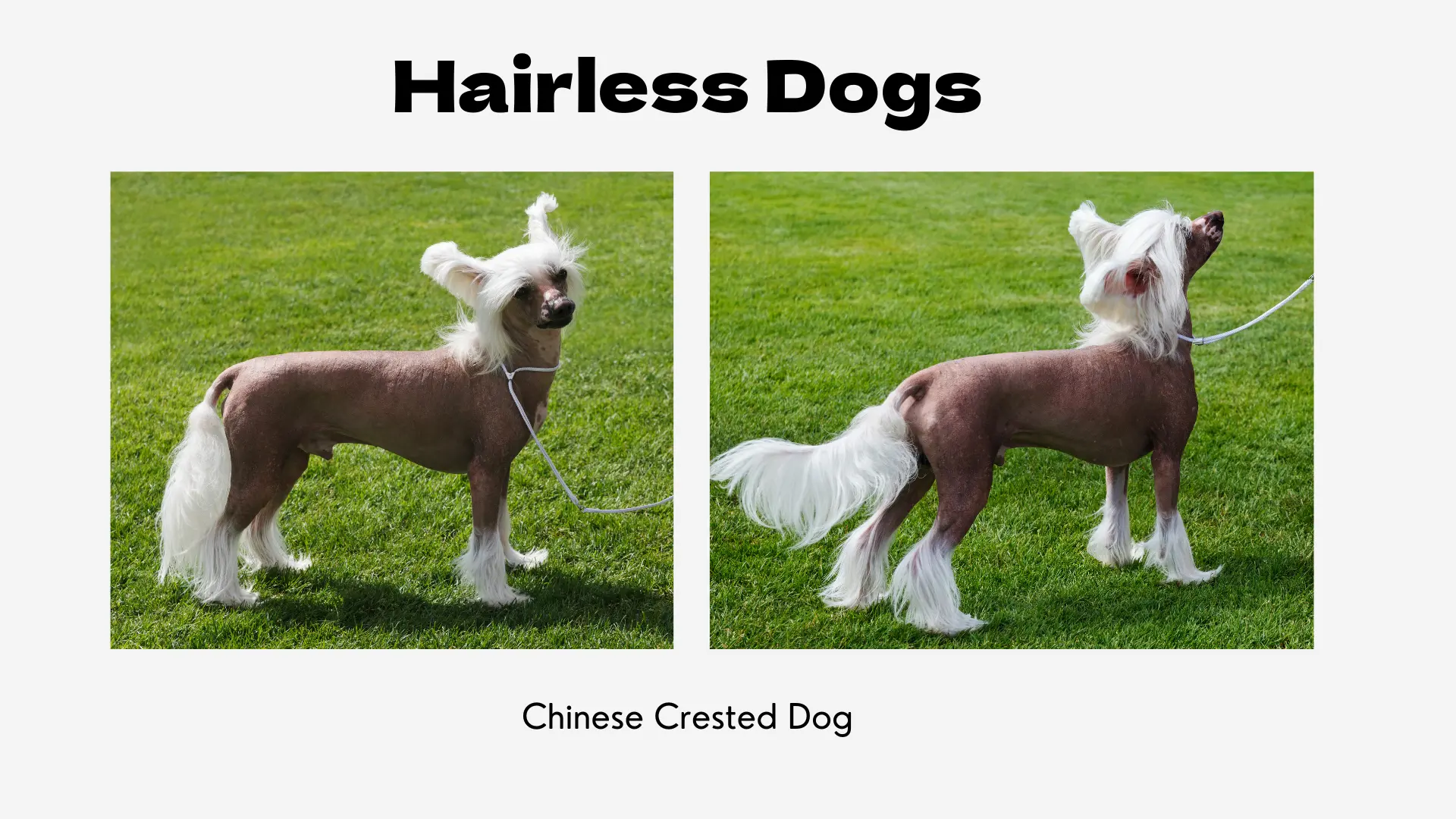
Hairless dogs have most areas of their bodies without fur coverage, directly exposing their skin, usually with localized hair on the head (crest), tail tip, and ankles. This is the result of genetic mutations leading to the absence of hair follicles or underdeveloped hair. Typical representatives include the Chinese Crested Dog, Peruvian Inca Orchid, and American Hairless Terrier.
Hairless dog’s grooming focus is on skin care, needing to provide sun protection and, in cold conditions, ensuring they wear warm clothing.
Long Hair vs. Medium Hair vs. Short Hair
The core of the division between long-haired, medium-haired, and short-haired dogs lies in the visual length of the fur on the dog’s body, the overall coverage effect, and the resulting grooming requirements, rather than simply comparing the absolute length of a single hair strand.
For example, although the Shih Tzu is small in size, its fur often covers its eyes and reaches the ground, with a noticeable skirt effect. It requires high-frequency daily grooming to prevent matting—this functional long-hair characteristic places it in the long-haired category alongside the Afghan Hound’s silky waterfall and the Old English Sheepdog’s fluffy mop.
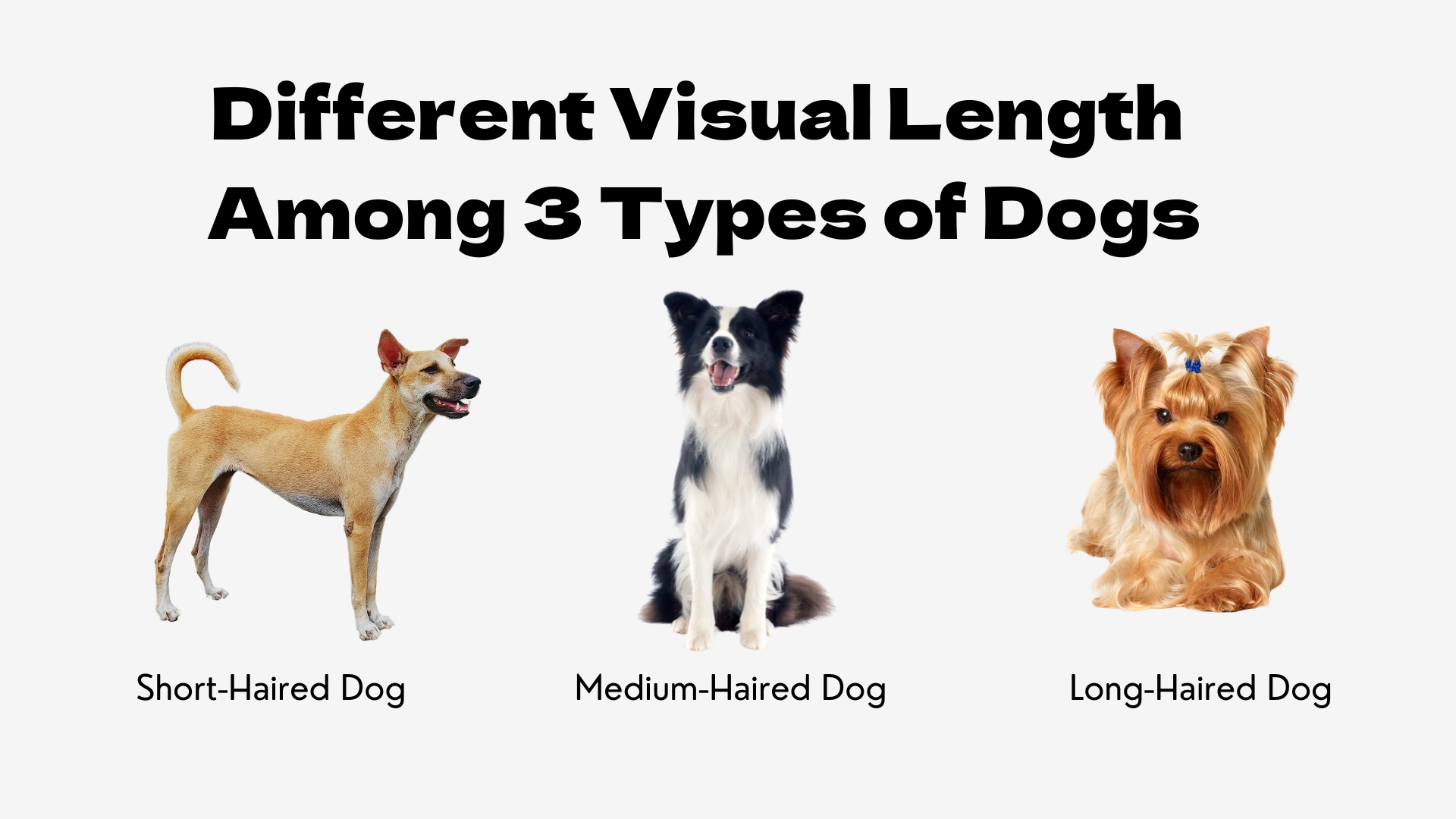
- Long-Haired Dogs: Examples include the Afghan Hound’s silky cascade, the Old English Sheepdog’s fluffy mop, and the Shih Tzu’s flowing locks. They have long furnishings on the body, legs, tail, and ears, often trailing on the ground or forming a “skirt.” The biggest challenge is severe matting and tangling, which can pull on the skin and cause pain. These breeds require the most grooming effort. If not for show purposes, trimming them into a neat “puppy cut” can significantly reduce grooming difficulty.
- Medium-Haired Dogs: These dogs have a moderate fur length that doesn’t drag on the ground nor lie tightly against the skin. Many medium-haired dogs have a double coat, with the outer coat slightly fluffy (like the “ruff” of Golden Retrievers or Samoyeds) or with rich furnishings on the legs and tail.
- Short-Haired Dogs: With very short fur, they excel in minimalist aesthetics. The fur usually lies close to the skin, outlining clear muscle lines and body contours. While they appear low-maintenance, they still require regular grooming. Shed hairs can embed into fabrics like needles, making them difficult to remove.
Knowing the fur length helps determine how long dog grooming takes for your dog and assists in planning regular grooming sessions.
Single Coat vs. Double Coat
What Is a Double Coat on a Dog?
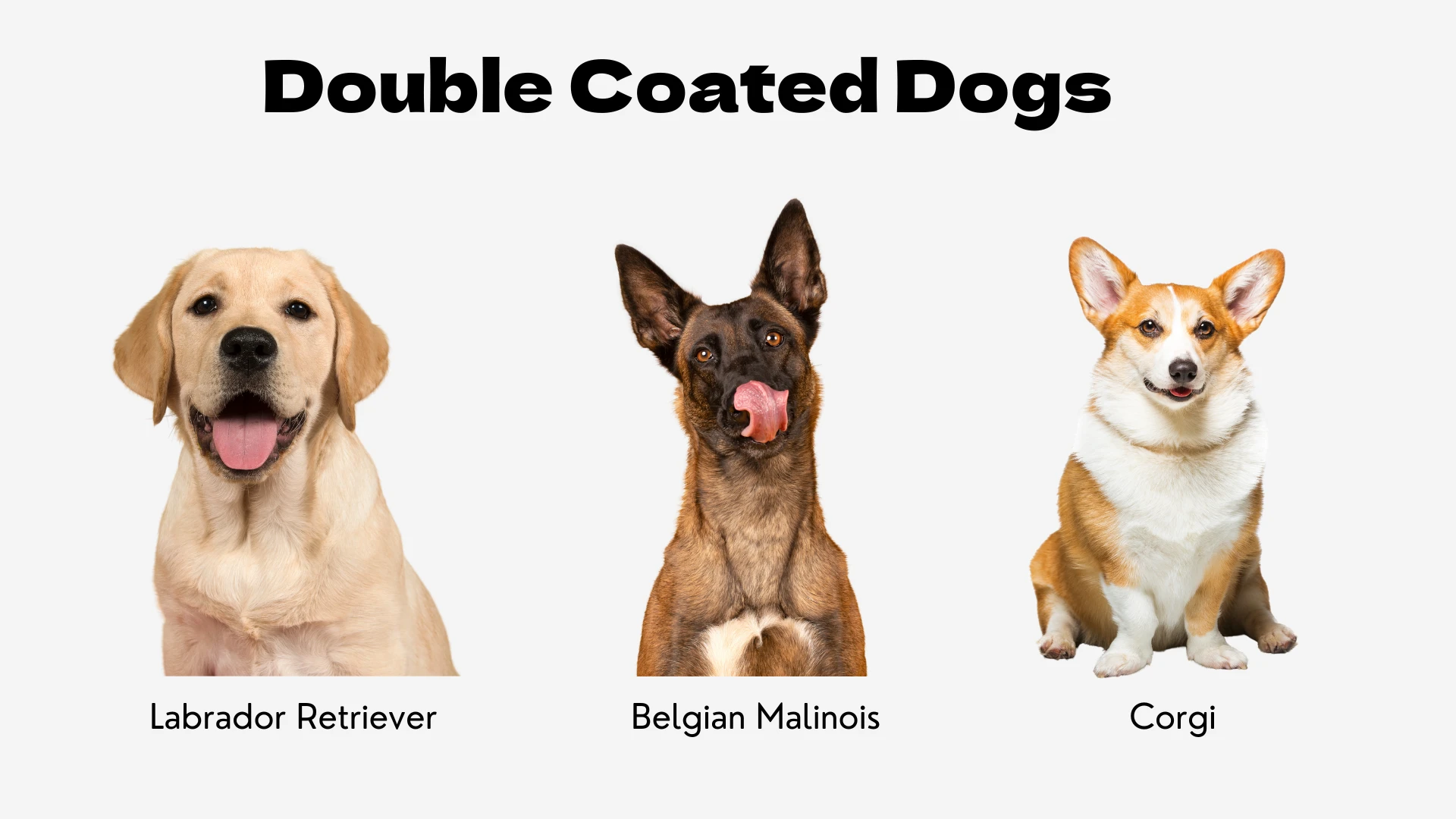
Double-coated breeds have a sophisticated two-layer structure:
- Outer Guard Hairs: Serve as the first physical barrier, providing water resistance, dirt repellence, abrasion resistance, and protection from UV rays.
- Undercoat: Consists of very fine, soft hairs, like a thick layer of wool or down, primarily functioning to insulate air and retain warmth.
Supported by the undercoat, the outer guard hairs often do not lie completely flat against the skin, making the overall fur appear more full and fluffy, especially when the undercoat thickens in cold seasons. Common breeds such as Corgis, Labradors, German Shepherds, Golden Retrievers, Huskies, and Shiba Inus belong to this category.
Dog undercoat removal is crucial during the molting seasons of spring and autumn. This requires high-frequency, deep grooming (even daily), using professional tools like undercoat rakes, deshedding tools, and slicker brushes to thoroughly remove large amounts of loose dead undercoat. If not removed timely, dead hair will accumulate and tangle, forming difficult-to-handle mats that are uncomfortable and can lead to skin issues.
Single-Coated Dogs
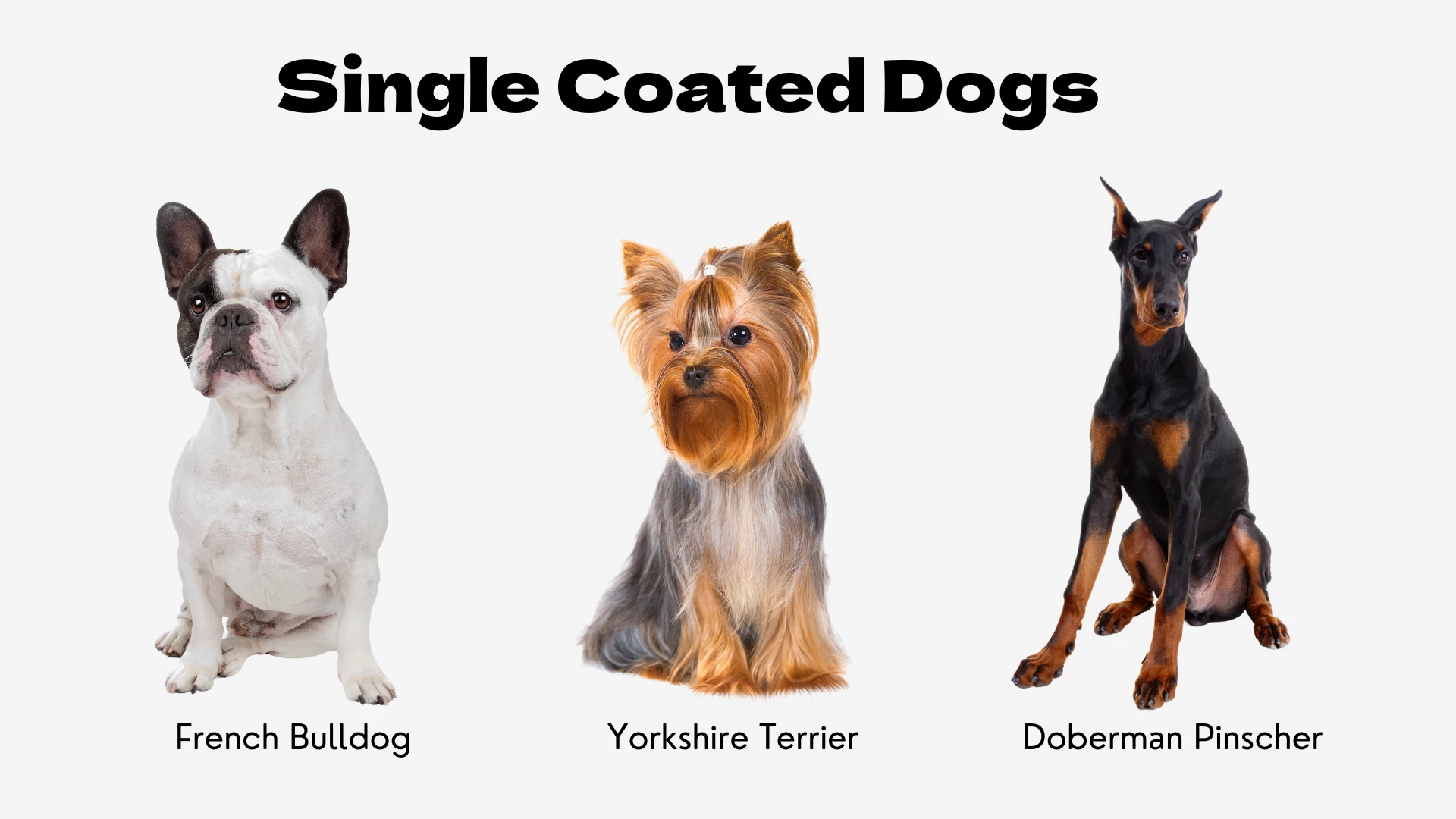
Single-coated dogs have only a single layer of fur, lacking the support of an undercoat, making the overall coat lie more flat or drape down. They can be:
- Short and Close-Fitting: Breeds like Greyhounds, Dobermans, and French Bulldogs have fur that wraps the muscles like satin.
- Curly or Long-Haired: Breeds like Poodles and Bichon Frise have fur that curls or drapes freely, or the silky long hair of Maltese dogs. Their hair continuously grows and requires regular trimming.
Regular combing of a dog with a single coat helps maintain coat health and appearance.
Conclusion
Understanding your dog’s coat type is essential for proper care and grooming. Dog coats can be classified based on three independent dimensions: length, structure, and texture. These dimensions are separate and do not imply causality between one another; any dog’s coat can be described using these three aspects.
The Three Dimensions of Dog Coat Types:
- Length: Dog coats vary as long, medium, or short. This affects the dog’s appearance and grooming needs but is independent of texture and structure.
- Structure: Refers to whether the coat is a single coat or a double coat. This dimension is about the layers present in the coat.
- Texture: Includes types like silky, rough/wire-haired, smooth, curly, and hairless. Each texture has unique characteristics and care requirements.
Differences Among Coat Textures:
- Silky Coated: Smooth, shiny, and fine hair that requires diligent grooming to prevent matting.
- Rough/Wire-Haired: Coarse and stiff fur that often needs specialized grooming techniques like hand stripping to maintain texture.
- Smooth Coated: Short, close-fitting fur that sheds tiny hairs, which can embed into fabrics.
- Curly Coated: Fur forms tight curls or waves, prone to tangling and requires frequent brushing.
- Hairless: Mostly devoid of fur, focusing care on skin protection and maintenance.
Variations in Coat Lengths:
- Long-Haired Dogs: Feature long furnishings that may reach the ground, such as the Afghan Hound or Shih Tzu. They require extensive grooming to prevent tangles and mats.
- Medium-Haired Dogs: Have moderate fur length that doesn’t drag on the ground nor lie tightly against the skin, often with some furnishings and possibly a double coat.
- Short-Haired Dogs: Possess very short fur that lies close to the skin, offering a sleek appearance but still necessitating regular grooming to manage shedding.
Single Coat vs. Double Coat:
The biggest difference between these two is the presence or absence of an undercoat:
- Double-Coated Dogs: Have a dense undercoat beneath the outer guard hairs, providing insulation. This undercoat affects shedding patterns and requires thorough grooming, especially during molting seasons, to remove dead hair and prevent matting.
- Single-Coated Dogs: Lack an undercoat, so their fur lies more closely to the skin or drapes down, resulting in different grooming routines and typically less shedding.
By recognizing and understanding these dimensions of your dog’s coat type, you can tailor your grooming practices to meet their specific needs. This not only keeps your dog looking their best but also contributes to their overall health and well-being. Regular grooming strengthens the bond between you and your pet, making the experience rewarding for both of you.
Note: Always consult with a professional groomer or veterinarian for personalized advice on your dog’s grooming needs.